
Your First 30 Days in New Jersey

Your First 30 Days in New Jersey After Moving from California:

The Checklist That Keeps a Cross-Country Move From Falling Apart

cross country movers

Don’t Let a West Coast Move Turn Into a New Jersey Paperwork, Parking, and Delivery Nightmare — What You Do in the First Month Often Decides Whether the Entire Relocation Feels Smooth or Chaotic

Rachel thought the hard part was over the moment the truck finally reached New Jersey.

She had made it out of California. The boxes were delivered. The keys were in her hand. The long drive, the scheduling, the packing, and the endless stress of preparing for a cross-country move were finally behind her.

Then the real problems started.

Her building had move-in rules she barely understood. Half the boxes were stacked in the wrong room. Her California paperwork was still buried in a file organizer somewhere between the kitchen supplies and winter coats. Her car still had California registration. She needed internet for work by Monday. And suddenly everyone kept telling her the same thing: “You need to handle New Jersey documents sooner than you think.”

That is what catches people off guard.

Moving from California to New Jersey is not just a transportation project. It is a transition project. The truck delivery is only one stage. The first 30 days after arrival are when the move either settles into order or slips into a mess of delays, lost documents, extra costs, and avoidable stress.

Why the First 30 Days Matter More Than Most People Realize

A lot of people assume the move is basically done once the shipment arrives. It is not.

Your first 30 days in New Jersey after moving from California are usually when you are trying to do all of the following at once:

  • Unpack enough to function without living out of random boxes
  • Confirm that everything arrived in good condition
  • Set up internet, utilities, and building access systems
  • Learn the neighborhood, parking rules, and daily commute
  • Update your address across banks, insurance, work, subscriptions, and medical providers
  • Organize the documents needed for New Jersey license, title, and registration transfers
  • Deal with storage, overflow furniture, or delayed setup issues if the new place is tighter than expected

That is why the first month matters so much. It is the month when small mistakes become expensive ones.

The New Jersey Deadline Most New Residents Underestimate

One of the biggest mistakes people make after moving from California to New Jersey is assuming they have plenty of time to deal with DMV-related paperwork.

They usually do not.

New Jersey requires new residents to transfer an out-of-state driver’s license and vehicle title and registration within 60 days of the move, or before the current documents expire, whichever comes first. In many cases, the state allows you to transfer the license and registration in one out-of-state transfer appointment.

That sounds manageable — until you realize what can slow it down:

  • You still need your identity and residency documents organized
  • You may need to satisfy New Jersey’s 6 Points of ID requirements
  • Your proof of address may still be incomplete during the first couple of weeks
  • If your vehicle is financed or leased, the lienholder paperwork can slow everything down
  • If a key document is missing, replacing it can take much longer than people expect

That is why your first 30 days in New Jersey after moving from California should be treated like a deadline window, not a settling-in vacation.

What to Handle in the First 72 Hours

The first few days after delivery should not be spent trying to “do everything.” They should be spent getting control.

Day 1 Priority: Make the Home Functional

Before you worry about decorating, focus on function.

You should unpack or locate the items that make daily life possible right away:

  • Bedding and towels
  • Chargers and power strips
  • Toiletries and medications
  • Work laptop and office essentials
  • Basic cookware, utensils, and coffee setup
  • Cleaning supplies and trash bags
  • Pet supplies, if applicable

Your goal is simple: stop the move from feeling like an emergency.

Day 2 Priority: Check the Delivery Carefully

A cross-country move should always be followed by a careful walkthrough of what arrived.

Open the important boxes first. Check your furniture. Inspect fragile items. Compare what showed up with your inventory and shipment expectations. If anything is damaged, missing, or misplaced, document it immediately while the details are still clear.

This is also the moment to figure out whether your new place can actually absorb the shipment the way you planned. Many people moving from California to New Jersey discover that a room layout, hallway width, stairwell, or storage situation feels very different in reality than it did on paper.

Day 3 Priority: Build Your New Jersey Admin Folder

Create one physical folder and one digital folder for the first month.

Put the following in it:

  • California driver’s license
  • Vehicle title or finance/lease information
  • Current insurance information
  • Lease, deed, or proof of New Jersey address
  • Social Security documentation or other identity paperwork
  • Move estimate, bill of lading, and moving receipts
  • Any building move-in instructions or parking rules

This one step prevents a huge amount of chaos later.

Your First 30 Days in New Jersey After Moving from California: A Week-by-Week Plan

Days 1–7: Stabilize the Basics

The first week is about making the move livable.

During this stage, focus on the core systems that affect your daily routine:

  • Confirm electricity, internet, water, and HVAC are fully working
  • Learn trash, recycling, package room, laundry, and maintenance procedures
  • Test smoke detectors, locks, door codes, and building entry systems
  • Update your shipping address with banks, employer, payroll, credit cards, and subscriptions
  • Locate your nearest grocery store, pharmacy, urgent care, and gas station
  • Figure out where you can legally park, especially if your area has permit rules or street cleaning schedules

This first week is also when you should decide whether everything actually fits.

If your California home was larger, or if the New Jersey apartment has less storage than expected, do not wait for the situation to get worse. Overflow items, staging delays, or temporary storage needs are much easier to solve early than after boxes have taken over every room.

Days 8–14: Start the Paperwork Before It Starts Chasing You

Week two is when your move starts to feel “normal,” which is exactly why people begin procrastinating.

Do not make that mistake.

This is the ideal time to start the New Jersey paperwork process.

Use the second week to:

  • Schedule your New Jersey MVC out-of-state transfer appointment
  • Review what you need for license, title, and registration transfer
  • Check that your proof of address documents are consistent and usable
  • Decide whether you want a standard license or REAL ID-compliant credential
  • Contact your lienholder or leasing company if the vehicle is not fully owned by you
  • Confirm your auto insurance reflects your new New Jersey garaging location

If you leave this until the last minute, the move stops feeling organized and starts feeling reactive.

Days 15–21: Finish the Tasks That Most People Keep Delaying

By the third week, the obvious tasks are usually under control. That is when the hidden tasks start causing problems.

This is the right time to clean up the items that quietly drag out a move:

  • Finalize your driver’s license transfer plan
  • Move the car title and registration process forward
  • Make sure every critical document is easy to find
  • Submit any required paperwork connected to a financed or leased vehicle
  • Set up local doctors, dentists, vets, schools, or childcare arrangements
  • Learn your commuter routes, toll habits, and parking workflow
  • Finish furniture assembly and room setup so the home starts functioning normally

This is also a smart time to deal with boxes aggressively.

A lot of cross-country moves feel “unfinished” for months because people stop once the essentials are unpacked. That creates background stress every day. By week three, you want visible progress, fewer loose items, and clear room functions.

Days 22–30: Close the Gaps Before the Move Starts Lingering

Week four is about cleanup.

By now, your goal should be to stop calling this “the move” and start calling it “home.”

Use the last third of the month to:

  • Double-check that address updates are complete everywhere that matters
  • Review your budget now that New Jersey rent, tolls, parking, groceries, and utilities are real costs
  • Confirm there are no unresolved delivery issues, damages, or missing-item questions
  • Finish shredding, storing, or filing all moving paperwork
  • Set reminders for any remaining New Jersey vehicle or license tasks still tied to the 60-day rule
  • Close out lingering California loose ends, including local memberships, service providers, or old deliveries

This is also the point where you should evaluate what is still not working.

Are you still tripping over unopened boxes?

Is a furniture piece in the wrong room because nobody had time to move it again?

Is the guest room acting as a storage unit?

Is your document folder still incomplete?

If the answer is yes, the move is not fully under control yet.

Real-World Problems That Can Derail the First Month

Scenario 1: The New Place Is Smaller Than You Thought

This happens constantly.

A California layout can make you feel like everything will fit. Then you arrive in New Jersey and discover tighter bedrooms, smaller closets, narrower hallways, less basement space, or stricter building access.

What looked manageable on a floor plan suddenly turns into stacked boxes, blocked walkways, and furniture that has nowhere to go.

The earlier you identify that problem, the easier it is to solve through rearranging, storage, or selective unloading.

Scenario 2: The Car Paperwork Becomes the Real Stress Point

Many people assume the house is the hard part and the car is easy.

Then they realize the title is with a lender, the proof of address is not ready, the documents are spread across several boxes, and the New Jersey paperwork process is not something they can casually handle months later.

That is why the first month matters. If you start organizing the car transfer process early, the deadline feels manageable. If you ignore it, it suddenly feels urgent.

Scenario 3: The Delivery Was Successful, but the Move Still Feels Unfinished

This is one of the most common emotional problems in long-distance moving.

Technically, the truck arrived. But the apartment is still chaotic. Half the rooms do not function. Storage decisions were never made. Daily routines feel broken. Every morning starts with hunting for basic items.

A move can be “complete” on paper and still feel very incomplete in real life.

Red Flags That Signal Your Move Is Starting to Slip

If any of the following are happening by the end of the first month, the move is probably not as settled as it should be:

  • You still have not booked or prepared for your New Jersey MVC appointment
  • You are not sure where your license, title, insurance, or lease documents are
  • Your home still has entire rooms that cannot be used normally
  • You have no clear plan for overflow furniture or extra boxes
  • Your mailing address has only been updated in some places, not all of them
  • You are still using California assumptions for parking, commute time, deliveries, or daily errands
  • The moving paperwork is buried instead of organized
  • You keep telling yourself you will “deal with it next week”

That is how a 30-day checklist turns into a 60-day scramble.

The Truth About a Smooth Cross-Country Move

A smooth move from California to New Jersey is not just about getting your belongings across the country without damage.

It is about what happens after the truck leaves.

It is about whether the schedule was realistic.

It is about whether the inventory was accurate.

It is about whether the destination was ready.

It is about whether you had the flexibility to use storage if needed.

And it is about whether the company you hired understands this route well enough to reduce chaos instead of adding to it.

That is the difference between a general mover and a route specialist.

Don’t Face This Alone

The first 30 days in New Jersey after moving from California can feel deceptively hard.

You are no longer dealing with the dramatic part of the move — the booking, the packing, the travel, the truck.

You are dealing with the part that quietly affects your daily life: paperwork, routines, timing, logistics, access, storage, and all the details that determine whether your new home starts working like a home.

That is why experienced support matters.

When the mover understands the California-to-New Jersey route, understands the delivery realities on the East Coast, and understands how to keep the process structured from start to finish, your first month usually feels more controlled, more predictable, and far less stressful.

Protect Your Move Today

If you are planning a move from California to New Jersey, do not leave the most important part of the process to a company that treats your route like just another long-distance job.

California New York Express Movers specializes exclusively in moves between California and New York, New Jersey, Connecticut, and Pennsylvania. That is not one service among many. It is the entire focus of the company.

MoveEast offers guaranteed prices, one company from start to finish, no subcontractors, and a guaranteed delivery time frame backed by $350 per day late. With facilities in Bell, Oakland, and Secaucus, the company is built around the exact corridor you are moving on.

Whether you are heading to Jersey City, Hoboken, Newark, Bergen County, the suburbs, or anywhere else in New Jersey connected to the California route, the best time to prevent first-month problems is before move day ever begins.
Moving from California to New York is a major transition that requires logistics precision, timeline coordination, and experienced long-distance movers. Whether you’re relocating from Los Angeles to Manhattan or Brooklyn to Southern California, choosing the right California to New York moving company makes the difference between stress and structure.

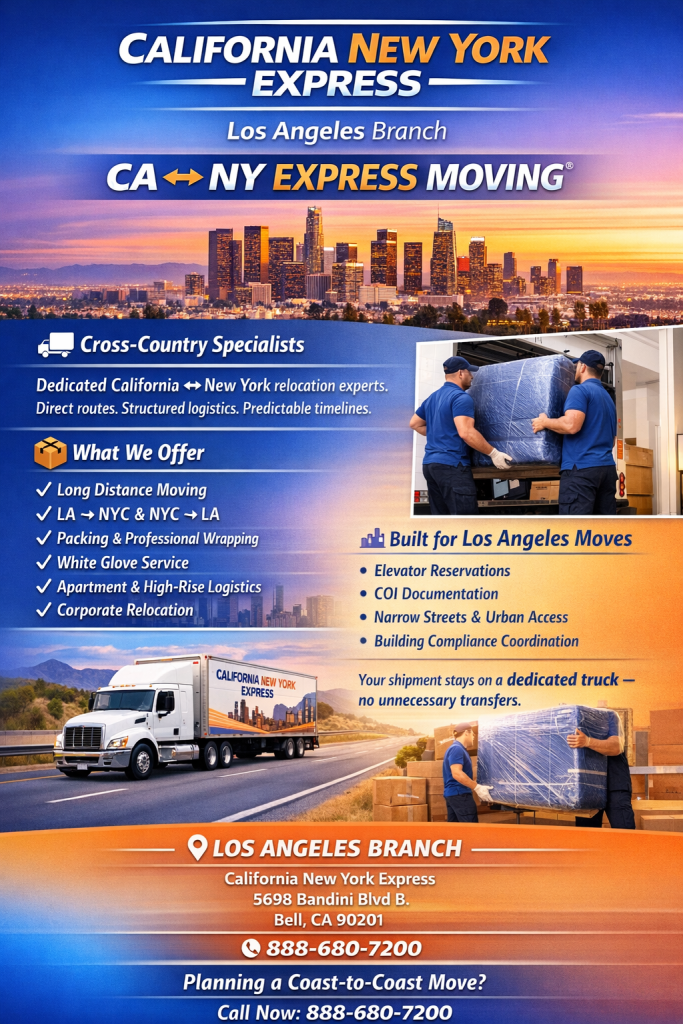
California New York Express operates from its Los Angeles branch in Bell, CA, specializing exclusively in CA ↔ NY routes. Unlike general movers, this is a dedicated cross-country service built around one corridor: California and New York.

Below is a visual breakdown of how the process works.


📞 Call 888-680-7200 for a CA ↔ NY Moving Quote


Dedicated Cross-Country Moving Specialists

California New York Express focuses exclusively on long-distance moves between California and New York.

Why this matters:

• Direct routes without detours
• Predictable delivery windows
• Coordinated scheduling
• Reduced handling risk
• Dedicated truck options

A dedicated truck means your shipment stays on the same vehicle from pickup to delivery — minimizing transfers and damage risk.


Services for Los Angeles to New York Moves

From its Los Angeles branch (5698 Bandini Blvd B., Bell, CA 90201), the company supports:

• Apartment & high-rise moves
• Elevator reservation coordination
• COI documentation
• Packing & professional wrapping
• White glove handling
• Corporate relocation

Urban logistics in LA and NYC require planning. Tight streets, building restrictions, and delivery windows are managed in advance.


Why Dedicated Truck Moving Is Safer

Many long-distance movers consolidate shipments. That often causes:

• Delays
• Warehouse transfers
• Increased handling
• Mixed shipments

Dedicated trucks reduce these risks by keeping your items separated and secure throughout the trip.

For cross-country moves, fewer touchpoints = lower damage probability.


Frequently Asked Questions

How long does it take to move from California to New York?

Transit typically ranges from 5–10 days depending on route timing and pickup window. Dedicated trucks often deliver faster because they don’t wait for consolidation.

How much does it cost to move from LA to NYC?

Pricing depends on volume, distance, access conditions, and service level. Dedicated truck service may cost more than shared loads but reduces risk and delivery delays.

Is a dedicated truck better for cross-country moving?

Yes. Dedicated trucks minimize transfers, reduce delays, and lower the chance of lost or damaged items.


Key Takeaways

• Specialized CA ↔ NY moving expertise
• Dedicated truck options available
• Los Angeles branch serving greater LA
• High-rise & urban logistics handled
• Direct coast-to-coast routing

Choosing a specialized California to New York moving company ensures route familiarity, structured timelines, and reduced risk.


Los Angeles Branch

California New York Express
5698 Bandini Blvd B.
Bell, CA 90201
📞 888-680-7200

Serving Los Angeles County and surrounding areas.

Request a structured coast-to-coast quote today.

Moving between California and New York is not a standard relocation. It involves scheduling precision, route efficiency, secure packing, and coordination between two high-demand states. If you’re planning a coast-to-coast move, choosing a specialized CA ↔ NY route carrier reduces delays and handling risks.

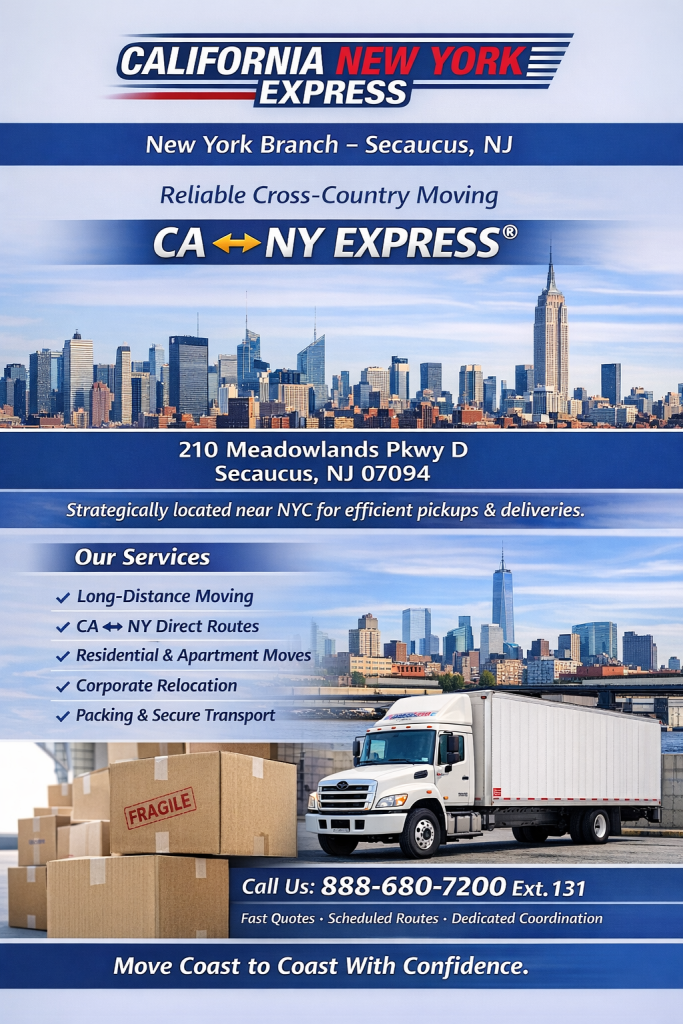
The New York branch of California New York Express is located at 210 Meadowlands Pkwy D, Secaucus, NJ 07094, strategically positioned minutes from NYC access points. This location allows efficient pickups and deliveries across Manhattan, Brooklyn, Queens, and surrounding New Jersey communities.

Below is a breakdown of how our Secaucus operation supports reliable long-distance moving.


📞 Call 888-680-7200 Ext. 131 for a Fast CA ↔ NY Quote


Why Secaucus, NJ Is Strategic for CA ↔ NY Moves

Secaucus provides direct access to NYC corridors without Manhattan congestion restrictions.

Advantages:

  • Quick access to Lincoln & Holland tunnels
  • Efficient dispatching to NYC boroughs
  • Lower staging delays vs. inner-city depots
  • Streamlined truck routing for scheduled deliveries

For interstate moves, logistics positioning directly impacts timing and cost efficiency.


Dedicated CA ↔ NY Direct Routes

Unlike generic interstate carriers, CA ↔ NY route specialization allows better planning and predictable transit windows.

Route Benefits:

  • Scheduled cross-country departures
  • Fewer transfer points
  • Reduced handling risk
  • Coordinated delivery windows

Direct-route operations help avoid the common issue of freight consolidation delays.


Residential & Corporate Long-Distance Moving

Whether relocating an apartment, home, or corporate office, coast-to-coast moves require structured planning.

Services Include:

  • Full packing & protective wrapping
  • Inventory documentation
  • Secure transport
  • Coordinated delivery scheduling
  • Corporate relocation logistics

Every move is built around structured inventory and scheduling management.


FAQs — CA to NY Moving

How long does it take to move from California to New York?

Transit typically ranges from 5–10 days depending on origin city, route scheduling, and seasonality. Dedicated route carriers often provide more predictable windows than general freight movers.

How much does a CA to NY move cost?

Costs depend on volume, access conditions, and service level (packing vs. transport only). Direct-route movers may reduce consolidation-related surcharges.

Is Secaucus a good location for NYC moves?

Yes. Secaucus offers fast access to NYC without the delays associated with Manhattan staging. It improves dispatch efficiency and reduces last-mile congestion issues.


Key Takeaways

  • Secaucus location improves delivery efficiency
  • CA ↔ NY specialization reduces handling delays
  • Direct routes create more predictable scheduling
  • Structured planning protects high-value shipments

Call the Secaucus NY Branch Today

📍 210 Meadowlands Pkwy D, Secaucus, NJ 07094
📞 888-680-7200 Ext. 131

If you’re planning a California to New York move, speak directly with the Secaucus branch to coordinate route timing and scheduling availability.

Moving from the San Francisco Bay Area to New York is not a typical long-distance relocation. It involves strict scheduling, building requirements, cross-country logistics, and coordinated delivery planning. Choosing experienced San Francisco to New York movers ensures your relocation is predictable, secure, and professionally managed from pickup to final delivery.

MoveEast – California New York Express specializes exclusively in CA ↔ NY routes, serving clients from Oakland, San Francisco, and surrounding Bay Area communities. Whether you are relocating an apartment, office, or full household, working with a dedicated cross-country moving company reduces delays, protects your inventory, and improves timeline accuracy.

Below is a simplified overview of the CA to NY moving process.


CA to NY moving company Secaucus NJ infographic showing direct routes and services

Step 1 – Pre-Move Planning & Inventory Preparation

A successful cross-country move begins with structured planning.

Key components include:

  • Detailed inventory assessment
  • Binding or transparent pricing model
  • Pickup window scheduling
  • Building COI requirements (NYC buildings)
  • Elevator reservations (if applicable)

Professional CA ↔ NY movers coordinate pickup logistics from Oakland warehouses and align delivery scheduling based on New York access restrictions.


Step 2 – Secure Transportation & Route Management

Unlike general long-distance movers, dedicated California to New York moving companies optimize routes specifically for this corridor.

This provides:

  • Fewer transfers between trucks
  • Reduced handling risks
  • Predictable transit windows
  • Centralized tracking coordination

Route specialization improves delivery accuracy compared to generic nationwide carriers.


Step 3 – Delivery, Building Compliance & Final Placement

New York delivery logistics require additional compliance steps.

Typical delivery considerations:

  • Certificate of Insurance (COI) submission
  • Delivery window approvals
  • Parking coordination
  • Stair carry or long-carry adjustments
  • Final room placement

Experienced cross country movers San Francisco residents trust understand NYC building requirements and reduce last-minute delays.


FAQs – San Francisco to New York Moving

How much does it cost to move from San Francisco to New York?

Costs vary based on volume, access conditions, and delivery window. Pricing typically depends on inventory size and logistical complexity rather than distance alone. Transparent quotes and route-specific carriers provide better cost predictability.

How long does a California to New York move take?

Transit time generally ranges from 7–14 days depending on scheduling and delivery conditions. Dedicated CA ↔ NY routes typically offer more predictable timelines than nationwide carriers.

What is the best way to move from the Bay Area to NYC?

Working with a specialized CA ↔ NY moving company reduces transfers, improves delivery accuracy, and ensures familiarity with NYC building policies.


Key Takeaways

  • Dedicated CA ↔ NY routes improve timing reliability
  • Inventory planning prevents pricing surprises
  • NYC building compliance affects delivery speed
  • Specialized movers reduce handling risk
  • Clear communication improves cross-country coordination

Moving from the Bay Area to New York?

If you’re planning a relocation from Oakland or San Francisco to New York, speak with a dedicated CA ↔ NY route specialist.

📍 745 85th Ave, Suite L, Oakland, CA 94621
📞 888-680-7200 Ext. 135

Request a cross-country moving consultation today.

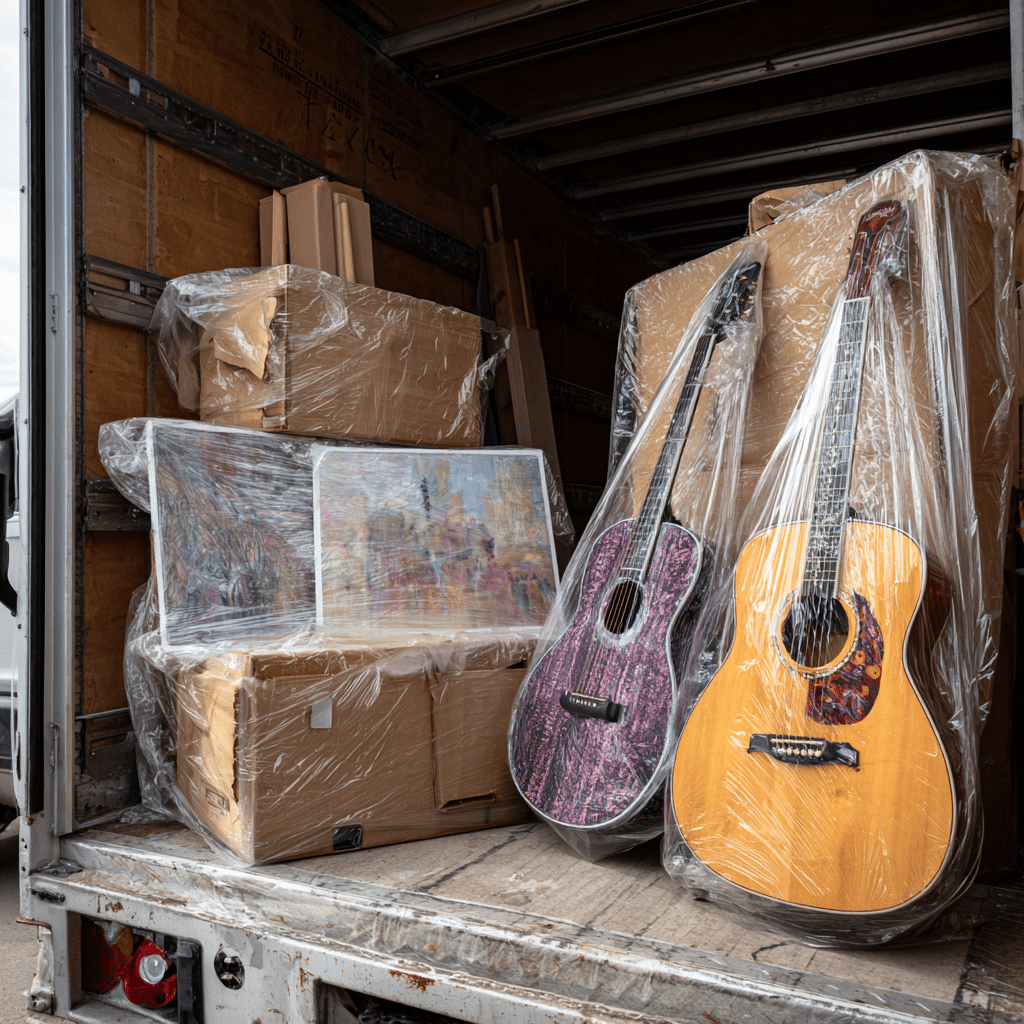
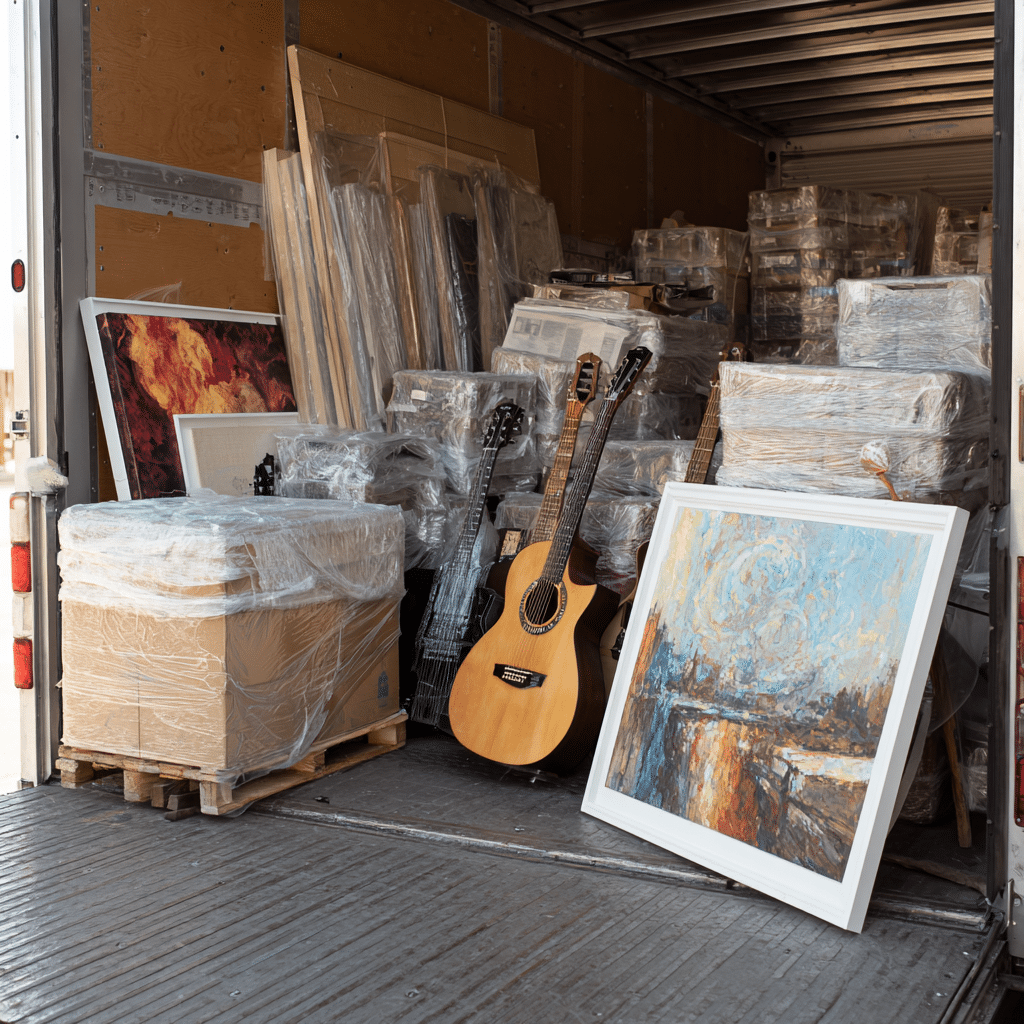
Moving artistic, musical, or photography equipment across the country is nothing like moving regular household items. Whether you’re a professional photographer, a musician, a painter, or a digital creator, your gear isn’t just “stuff”—it’s how you earn a living.

This guide breaks down how to pack, ship, and protect your creative studio when relocating between California and New York, and how to work with a dependable mover for long-distance CA↔NY routes.


1. Start With a Complete Studio Inventory

Before you touch a single box, document everything in your studio.

Create three categories:

  1. Delicate / fragile items
    • Cameras, lenses
    • Lighting equipment
    • Musical instruments
    • Framed artwork
    • Oils, acrylics, and specialty supplies
  2. Hard-to-replace items
    • Vintage instruments
    • Limited-edition cameras
    • Custom canvases
    • Archival work or negatives
  3. Bulky or heavy items
    • Stands, tripods, backdrops
    • Studio furniture
    • Amps, speakers, mixers
    • Printing equipment

A thorough inventory helps with planning, pricing, and insurance—and prevents loss during transit.


2. Packing Tips for Artistic and Creative Equipment

Photography gear

  • Use hard-shell cases with customizable foam.
  • Remove batteries from all devices.
  • Wrap lenses individually in microfiber cloths.
  • For lighting gear, secure bulbs separately in padded containers.

Musical instruments

  • Loosen string tension on guitars, violins, and similar instruments.
  • For brass and woodwinds, separate removable pieces and pad them individually.
  • Use instrument-specific hard cases.
  • If you own a piano or keyboard workstation, hire movers who can handle specialty items.

Fine art

  • For canvases, use corner protectors + glassine paper + bubble wrap.
  • Never lay canvases flat; stand them upright.
  • For framed work, create an “X” with painter’s tape across the glass to prevent shattering.
  • Use custom-size picture boxes if possible.

Content creator setups

  • Secure monitors in original boxes when possible.
  • Use padded sleeves for microphones and podcasting gear.
  • Protect PC towers with foam-in-bag cushioning or molded inserts.

3. Storage Planning for Creative Professionals

If you’re splitting time between coasts or don’t yet know how much studio space you'll have, consider temporary storage.

Choose a storage space that is:

  • Climate-controlled
  • Pest-free
  • Secure with individual alarms
  • Easily accessible for large cases and gear

Items like canvases, musical instruments, and electronics are vulnerable to humidity and temperature changes—so climate control isn’t optional.


4. Insuring Your Creative Studio Equipment

Your artistic equipment is often worth far more than typical household goods. Check:

Home or renter’s insurance

Some policies cover items in transit, but many do not.

Specialty gear riders

You may need additional coverage for cameras, instruments, or artwork.

Mover-provided valuation coverage

Moving companies offer valuation protection, but it’s not the same as insurance. It may not cover high-value professional gear unless upgraded.

Take photos of each item before packing. Save serial numbers and receipts.


5. Should You Ship or Move Gear With a CA↔NY Mover?

For cross-country relocations, you’ll choose between:

A. Moving everything through a CA↔NY specialist

Best for:

  • Full creative studios
  • Large instruments
  • Lighting rigs
  • Multiple cases of gear
  • Expensive or fragile equipment

This option keeps everything together and simplifies insurance.

B. Shipping select items

Good for:

  • Single cameras
  • Lenses
  • Microphones
  • Smaller items already in hard cases

Avoid shipping large guitars, keyboards, lighting gear, or framed art—they break easily with parcel carriers.

C. Carrying essentials with you

You should hand-carry:

  • Primary camera bodies
  • Favorite lenses
  • Hard drives and memory cards
  • Anything irreplaceable

6. How to Work With a CA↔NY Mover When You Have Creative Equipment

Choose a mover with:

✔ Experience with fragile, high-value items

✔ Predictable timeframes (not multi-week windows)

✔ Availability on both coasts

✔ Direct service without subcontractors

MoveEast specializes exclusively in Los Angeles, San Francisco, and New York City—making them a strong fit for creative professionals who move between major artistic hubs.

Packing assistance

Ask for partial packing services for large lights, monitors, and framed artwork—they often require custom protection.

Labeling

Use a code like:

  • PH for photography
  • MU for music
  • AR for artwork
  • CR for content creator gear

This helps with tracking and minimizes mishandling.


7. Setup Tips: Rebuilding Your Studio on the Other Coast

When you arrive in your new home:

  • Start with climate-sensitive items (instruments, cameras).
  • Set up a dedicated unpacking zone.
  • Test all electronics for damage immediately.
  • Reassemble stands and lighting gear last.
  • Update your studio layout based on the new space’s lighting and acoustics.

Moving between California and New York may require adjusting your creative workflow—natural light, room acoustics, and humidity vary greatly by region.

Adriaan T.
Adriaan T.
Aug 10, 2025

Making a point of writing a review since it's hard to find reasonable moving companies. Read more testimonials

Nicole Hyman
Nicole Hyman
Oct 08, 2025

I had to move high-end artwork and furniture from our office in a high-rise building in Westwood, CA to two separate luxury residences - one in Wainscott, NY and one in Greenwich, CT.Read more testimonials

Danielle K.
Danielle K.
Aug 11, 2025

Very competitive prices and warm customer service. I have used them twice now, in 2021 to LA - and 2025, back to NYC. Read more testimonials

Back to top