

Moving from California (LA or SF) to an East Coast rowhouse or NYC apartment requires specific, local planning so deliveries go where and when they need to.
Measure and document
- Measure large furniture and openings (doorways, stairwells, elevators, turn radii). Photograph pieces and tight passages. Note disassembly needs and reassembly parts.
- Create an inventory tied to delivery order and labels (room name, “first delivery” vs “final delivery,” fragile, and orientation).
Confirm access and building rules
- Ask building management or the strata for elevator reservation windows, move-day protocols, loading dock hours, keys or fob access, and any required Certificate of Insurance (COI) wording. Request these details in writing.
- For rowhouses and brownstones, confirm long-carry procedures and if movers can use rear or side entrances.
- For NYC apartments, confirm protected floors (e.g., no moves during building quiet hours) and whether move-in hours require a superintendent or doorman.
Arrange parking and permits
- Check curb parking rules where the truck will load/unload. Ask the building or city whether a Temporary No Parking (TNP) permit, meter covers, or a loading zone reservation is required and how to apply. Provide permit details, block face, and truck dimensions to your moving coordinator.
- If a shuttle truck is needed because a large truck can’t access the block, confirm shuttle distance, number of shuttle trips expected, and any additional time that may add to delivery windows.
Coordinate timing and split deliveries
- Distinguish requested vs. first-available vs. estimated delivery dates. Get a written confirmation of the agreed delivery window and any hold/release dates for short-term storage.
- If your shipment is split (common cross-country), label boxes and inventory lists with shipment segments and specify delivery order. Confirm which carrier handles each leg and who is responsible for final delivery and storage release.
- Plan move buffers around lease start/stop dates and elevator reservation slots.
Communicate operations in writing
- Share a moving packet with movers and building contacts: inventory, photographs, measurements, disassembly notes, delivery address specifics (unit number, buzzer code), elevator slot confirmations, COI contact, parking permit copies, and a single day-of-contact name and cell number.
- Request written confirmation of truck size, estimated arrival time, and expected number of crew and shuttle trips.
Document condition and handling
- Photograph high-value and fragile items before pickup and on delivery if possible. Note preexisting condition on inventory forms.
- Provide clear handling instructions and box labeling (destination room, “top,” fragile). Flag any items that require hoisting, stair carry, or special tools.
Storage, timing, and contingency
- If items go to temporary storage, confirm storage release dates and who schedules final delivery from the warehouse. Document storage location and access procedures.
- Have a backup plan for missed elevator slots, parking denial, or weather delays. Confirm whether movers can reschedule or split deliveries and how that affects delivery windows.
MoveEast coordination
- Share your MoveEast shipment details, COI requests, elevator slots, parking permits, and building contact info with your MoveEast coordinator so they can align the cross-country carrier, local delivery team, and warehouse timing.
Practical takeaway
Measure, document, and get permissions in writing: measurements, elevator and parking confirmations, COI requirements, delivery windows, and split-shipment instructions will reduce surprises on delivery day.
Why Philadelphia Rowhouse Delivery Needs Early Planning
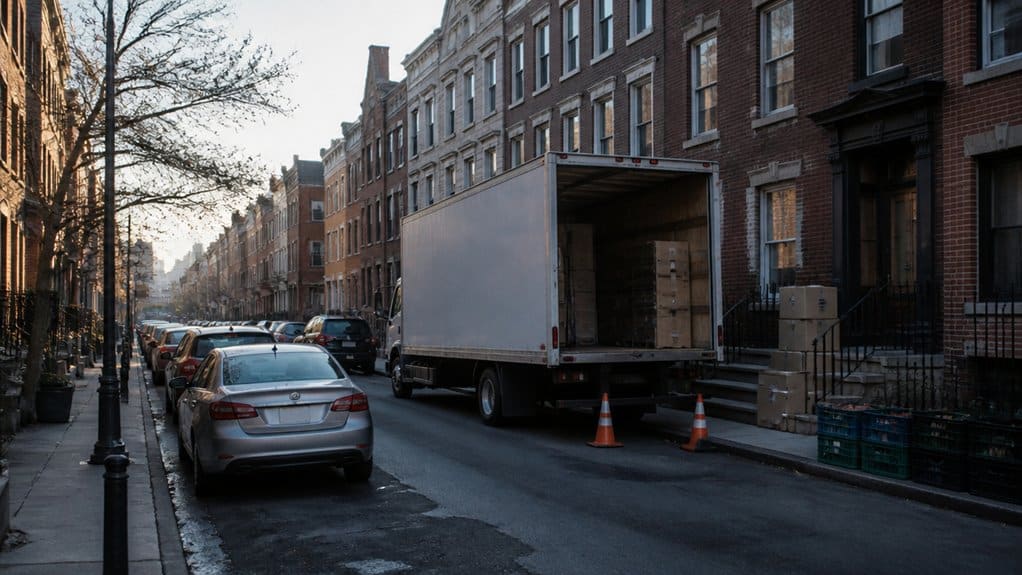
Philadelphia rowhouse deliveries require planning well before your cross-country shipment departs California. Narrow streets, stoops, and long carries from commercial trucks to front doors can change how a delivery is executed and what equipment the crew needs.
Before the move leaves LA or SF:
Before the move leaves LA or SF, confirm access, measurements, and parking plans to avoid costly delivery delays.
- Confirm the building contact (manager, superintendent, or landlord) and get written access instructions and any COI (certificate of insurance) requirements the building may request.
- Measure large furniture and doorways, stairwells, and entry clearances at the Philadelphia address. Photograph tricky stair runs, turns, and any low-hanging fixtures. Note items that may need disassembly and mark them on the inventory.
- Decide whether elevators will be available. If the unit is in a larger apartment or condo, ask management about reserving elevator slots and any required pads, protection, or elevator keys.
Street, parking, and permit planning:
- Review the delivery block’s curb width, alternate-side parking rules, loading zone restrictions, and likely truck routes. Measure curb-to-door distance for long carries.
- If a Temporary No Parking permit may be required for a truck to stop close to the building, confirm the city or municipal permitting process and deadlines with local authorities or building management and start the application early.
- Plan possible shuttle locations if a long carry is unavoidable. Provide the mover with GPS coordinates or photos of the intended parking spot and any loading restrictions.
Scheduling and delivery windows:
- Define your preferred delivery date and a realistic first-available and estimated delivery window. Confirm which date the mover will hold and what flexibility exists for split or staged deliveries.
- If you need a storage release date or are planning split deliveries (e.g., portion to storage, portion to residence), label inventory clearly, separate items by delivery order, and get written confirmation of the split plan and timing.
Operational documentation to provide the crew:
- Send a floor plan or photos, an itemized inventory with measurements, and written access notes (keys, buzzer codes, back entrance, stair/landscape obstacles).
- Note any fragile or high-value items with photos and handling instructions. Document pre-move condition for items that may require special care.
Communication and confirmations:
- Coordinate delivery timing with the moving crew, the building contact, and neighbors if street access will affect others. Confirm parking spot, elevator reservations, and COI acceptance at least a week before arrival.
- Ask the mover to confirm estimated arrival time the day before and to provide contact information for the delivery supervisor.
Takeaway: Finalize building contacts, measurements, parking/permit plans, elevator reservations, and an itemized, labeled inventory before the shipment leaves California so the MoveEast crew can schedule the right equipment, crew size, and delivery sequence for your Philadelphia rowhouse. Additionally, it's crucial to hire trustworthy movers to ensure a smooth transition during your move.
Truck Parking Temporary No Parking Permits and Street Access
Truck parking and curb access — plan these details well before the truck departs California.
Confirm truck size and curb needs
- Provide your mover the exact truck length and required curb space, plus any separate shuttle vehicle dimensions. Include measured driveway or alley widths and photos of the approach if available.
- Note loading constraints such as long carry distances, stairs, narrow vestibules, or elevator capacity (weight and dimensions).
Check local street access and parking permits
- For NYC, NJ, CT, or PA deliveries, ask building management whether a temporary no-parking permit, commercial loading zone, or private curb access can be requested. City agencies and municipal rules differ; the mover can often submit permit requests but you should confirm the local contact and earliest submission deadline.
- Identify hydrants, bus lanes, bike lanes, alternate side rules, and one-way blocks on the delivery street. Provide the mover with exact cross-streets and block-face photos where space looks tight.
Coordinate building access and documentation
- Confirm elevator reservation windows, freight elevator dimensions, and any building move-day rules (hours, pad/blanket requirements, refuse locations). Request written confirmation from building management and get a building contact name and phone for move day.
- If a Certificate of Insurance (COI) is required, request COI instructions and recipient contact from management early and send them to your mover. Note any additional on-site requirements (ID, badges, vendor registration).
Schedule and label for split or timed deliveries
- When final delivery is split from the main cross-country load or routed to storage first, separate inventories and label boxes/rooms clearly. Provide the mover with a delivery priority list (which items need to arrive first) and written delivery window preferences.
- Distinguish requested delivery date, mover’s first available date, and the confirmed delivery appointment in writing. Confirm any storage release or re-delivery timing with MoveEast if using interim storage.
Prepare neighborhood and alternative plans
- If curb space looks tight, identify nearby alternate stopping points (side streets, loading docks, municipal lots) and note any long-carry or shuttle needs. Provide secure parking coordinates and permission contacts if using private lots.
- Document neighbor or property manager concerns in writing and share them with the mover.
On move day: communication and records
- Send a final email with truck dimensions, arrival phone numbers, elevator slot, COI confirmation, and curb permit status. Walk the route with the building contact if possible and photograph curb space showing hydrants, signs, and obstructions for the mover’s records.
- For fragile or high-value pieces, include photos, measurements, and handling notes on the inventory and attach them to the delivery paperwork.
Practical takeaway
Confirm truck size, parking/permit requirements, elevator reservations, COI instructions, and a written delivery window with building management and your mover well before the truck leaves California. Clear labels, a prioritized inventory, and a confirmed curb plan reduce on-site delays and help the cross-country delivery proceed according to schedule. Additionally, be aware of local regulations and requirements that may affect your move to ensure a smooth process.
Rowhouse Stairs Tight Turns Doors and Furniture Measurements
Many Philadelphia rowhouses and New York City walk‑ups have narrow stair runs, tight landings, and doorways that leave little margin for oversized furniture. Movers handling California-to–East Coast shipments (for example LA or San Francisco to NY, NJ, CT, or PA) should measure and document the entire path from truck to final room before loading.
What to measure and document
- Exterior approach: curb-to-door distance, sidewalk obstructions, street width, and likely truck parking spot. Note any required street permits or posted parking rules that building management or the city should confirm.
- Truck placement and carry distance: estimate carry length from truck to building entrance and note if a shuttle or smaller truck may be needed for narrow streets or restricted access.
- Entry and interior route: door widths, threshold heights, hallway widths, stair widths (clear width between banisters), landing depths, turning radii at corners, ceiling heights over landings, and any low light fixtures or exposed radiators.
- Elevators: interior clear dimensions, door opening width, weight limit, and required elevator reservation window. Get elevator slot confirmations in writing when required.
- Door hardware and obstructions: swinging door clearances, doors that open into stair landings, handrails, built-in shelving, and wall-mounted HVAC units.
- Final room: doorway and furniture placement measurements, overhead clearances, and whether items must be carried up additional stairs or through narrow halls.
Labeling, photos, and notes
- Take clear photos of stair runs, landings, doors, and elevator interiors with a tape measure in frame. Note direction of turns (left/right), number of steps between landings, and any protrusions that reduce clearance.
- Create an access note on the inventory for each large item: include width, height, depth, weight estimate, whether it disassembles, and which parts (legs, rails, arms) can be removed.
- For split deliveries, mark boxes and furniture by delivery sequence, storage release date, and which items go to storage vs immediate delivery.
Planning disassembly and handling
- Identify items that can be partially disassembled (legs, rails, bulky arms) and list required tools or on‑site labor. Document whether components must travel with the main piece or can be shipped separately.
- For fragile or high‑value pieces, add condition notes and photos to the inventory and flag handling instructions on the bill of lading.
Coordination with receiving location
- Provide building management or landlord with COI requests early and confirm required wording. Ask management to confirm elevator reservation rules, move hours, loading dock availability, and any building move fees.
- Confirm delivery windows (requested, first available, estimated, and confirmed) and document them in written communications with the carrier. If a split delivery or storage hold is planned, confirm storage release date and any delivery time constraints.
On moving day
- Review access notes, photos, and disassembly plans with the moving crew before loading the truck.
- Reconfirm truck placement, parking permissions, elevator slots, and building contact person for both origin and destination.
Why this matters
Measuring and documenting the full path reduces surprises at delivery: it helps the carrier plan for shuttle trucks or extra crew, determines if partial disassembly is required, and supports clear written instructions for split deliveries or storage holds. Hiring professional packers can further enhance the efficiency of this process.
Practical takeaway
Before the truck leaves California, create an access packet with measurements, photos, itemized handling notes, elevator and parking confirmations, COI request details, and delivery window instructions—share it with MoveEast and the destination building contact.
What to Confirm With a Landlord Neighbor or Building Manager
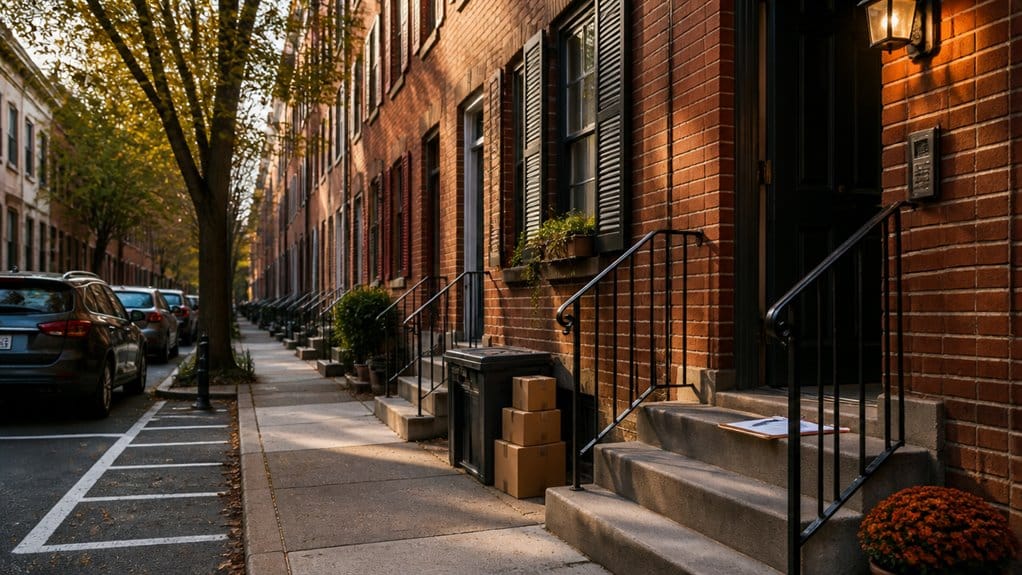
When a shipment is leaving California for the East Coast (especially LA or SF to NY, NJ, CT, or PA), confirm these operational details with the tenant, neighbor, or building manager well before pickup and again before delivery.
Pre-delivery confirmations
- Exact entrance, buzzer and contact person: confirm the correct street entrance, unit buzzer code, and a direct phone number for someone who can meet the crew or open the door on delivery day. Note any alternate contacts for split deliveries.
- Parking and street access: ask whether truck parking is allowed at the curb, if a commercial truck can stop on the block, and whether the building or city requires a temporary parking permit or street-use permit for an interstate tractor-trailer. If a long carry or shuttle will be needed, confirm the nearest legal parking location and shuttle route.
- Loading and elevator rules: confirm elevator reservation procedures, reserved time slots, and any requirements for elevator protection (pads, floor runners). Measure and report elevator interior dimensions, hallway widths, stair widths, and any low-clearance items.
- Building entry rules and arrival windows: check guest-entry protocols, security desk check-in, required ID, and delivery windows or quiet hours. Ask whether specific arrival times must be listed on a COI for building access.
- Storage and split delivery timing: confirm release and storage dates for any temporary warehouse hold, and whether partial deliveries are permitted. For split shipments, document which inventory goes to which delivery address and confirm delivery sequence and timing.
- Access logistics and special handling: note rowhouse stairs, narrow landings, turn radii, stoops, and whether building staff can assist with doors or elevator doors. Provide measurements and any disassembly/reassembly expectations the building requires.
- Notices and required documents: ask if the building requires a Certificate of Insurance (COI) with specific limits, named additional insured, or proof of workers’ comp; confirm who to email those documents and any lead time required.
- Parking enforcement and permits: confirm loading-zone time limits, meter rules, tow-away blocks, or permit application windows with the building manager or city transportation department so the mover can schedule permits if needed.
Operational items to document and share
- Create a short access note that includes entrance, buzzer code, contact names and phones, elevator slot times, maximum elevator/corridor dimensions, parking/permit instructions, and delivery window. Attach this to the shipment file and email it to building management and your MoveEast coordinator.
- Label inventory for split deliveries: mark cartons and furniture with the delivery sequence and final address. Include a separate inventory list for items remaining in storage.
- Photograph tight spaces and high-value items: take photos showing staircases, elevator interiors, and large or fragile items’ condition before loading. Add handling instructions to the item notes.
- Confirm estimated vs. requested delivery dates: review the mover’s estimated arrival window, request window you prefer, and agree on the confirmed delivery date and any buffer days for traffic or shuttle requirements.
Sample checklist to confirm with building manager or neighbor
- Entrance, buzzer, and on-site contact
- Truck parking location and permit requirements
- Elevator reservation, dimensions, and protection rules
- Stairway widths, turns, and long-carry notes
- COI recipient, requirements, and lead time
- Delivery window and quiet-hour restrictions
- Split-delivery labels/inventory and storage release date
Practical takeaway
Document these access, parking, elevator, COI, and split-delivery details in writing and circulate them to MoveEast, the building manager, and anyone meeting the crew at delivery to reduce last-minute delays on cross-country delivery days. Additionally, understanding truck size options can help ensure that the right vehicle is selected for your move, reducing complications on delivery day.
Delivery Day Plan for a California to Philadelphia Shipment
Delivery day planning for a California-to-East-Coast shipment (especially CA to NY, NJ, CT, or PA) should focus on access, documentation, and clear delivery sequencing. Start final checks well before the truck arrives in Philadelphia, New York, or other East Coast delivery cities; LA and SF pickups can affect pickup windows and carrier routing.
Before departure from California
- Confirm building contacts and access notes at origin: building manager or landlord name, phone, elevator reservations, loading dock hours, stair limits, and any required COI (certificate of insurance) or vendor sign-in procedure. Document responses in writing.
- Photograph and record large items, tight turns, and staircases that could affect loading or disassembly. Note measurements and any disassembly required.
- Label items that will be split between storage and final delivery, and prepare separate inventory lists for each leg.
Pre-delivery coordination for East Coast arrival
- Ask the carrier or MoveEast rep to confirm the requested delivery date, the first-available delivery window, and the confirmed appointment window once scheduled. Distinguish these dates in your paperwork.
- Confirm whether the delivery will be a single stop or split delivery. If split, verify which items go to storage vs. immediate delivery and label/inventory them accordingly.
- Request COI to present to condo or co-op boards if required. Provide building management with the mover’s insurance name and contact as requested.
Parking and elevator access
- Confirm parking and permit requirements with building management or the city: Temporary No Parking permits, commercial loading zones, alternate side parking impacts, curb cut needs, or restricted truck routes. Ask who issues permits and who will pay or apply.
- Reserve elevator slots when applicable. Document elevator size limits, weight limits, and any required padding or protection rules.
- Note long-carry distances from the curb or shuttle area to the door, and whether a dolly or stair carry will be used.
Delivery day documentation and crew instructions
- Prepare a single-page arrival packet: contact name and phone, full delivery address with unit number, confirmed delivery window, truck size, and any building entry instructions (intercom codes, doorman name, loading dock directions).
- Provide crew with furniture measurements, stair and hallway widths, disassembly/reassembly instructions, and item condition notes. Photograph high-value or fragile pieces and attach handling instructions.
- Label boxes and large items with destination (unit number or storage), sequence number for unloading, and inventory ID that matches the move order.
If access or timing changes
- Notify dispatch and the building contact immediately if access changes or arrival time shifts. Ask dispatch to update the estimated delivery window and unload sequence in writing.
- If elevator reservations, permits, or building approvals are delayed, confirm a contingency plan: alternate delivery date, shuttle/drop-off location, or temporary storage release timing.
Split deliveries and storage timing
- For split deliveries, separate inventories clearly: label which shipment portion goes to storage and which is for delivery. Confirm storage release dates and how items are scheduled for final delivery.
- Document agreed delivery order and arrival windows in email so crews and building staff have a written plan.
Practical takeaway
Document contacts, measurements, permits, elevator and parking details, and split-delivery labels in writing; share that packet with MoveEast and building management ahead of arrival so the crew can execute the delivery order and adjust quickly if access changes.
Common Mistakes That Delay Philadelphia Deliveries
Small access issues in Philadelphia can add significant time to a cross‑country delivery from California. For customers moving from LA or SF to PA, NY, NJ, or CT — especially into NYC apartments, Philadelphia rowhouses, or tight suburban streets — document these access and coordination items before the truck departs.
Pre‑dispatch checklist
- Measure and record curb‑to‑door distances, stair counts, and elevator dimensions. Note long carries (distance from street/parking to building entrance) and any required stair runs.
- Measure sofas, beds, dressers, and large boxes and compare them to doorways, stair landings, and elevator interiors. Include width, height, and depth on the inventory.
- Photograph narrow hallways, turns, staircases, elevator interiors, and building exteriors (curbside conditions). Attach photos to the move order.
Building and parking coordination
- Confirm building entry rules with management: elevator reservation slots, move hours, required certificates of insurance (COI), loading dock procedures, and any elevator protection requirements. Ask what documentation they will require and how they prefer delivery notifications.
- Reserve elevator times and document confirmed time windows in writing. If elevators are not available, plan for stair moves and add time and manpower notes.
- Check local curbside parking rules with the city or building. Some locations require temporary parking permits or commercial loading zone permits; verify who issues them and whether the building will request them.
Delivery timing and staging
- Distinguish the requested delivery date, first available delivery window (estimated), and when the building or storage facility confirms a slot. Document all dates in confirmation emails.
- Plan split deliveries: label boxes and furniture by delivery group (e.g., “Phase A — Move‑In 8/10 Apt 4B” vs. “Phase B — Storage 8/12”), include separate inventories, and provide clear access notes for each stop.
- If items go to storage before final delivery, confirm storage release dates and any time limits. Note whether storage sites have elevator access, loading docks, or specific pickup windows.
Communication and documentation
- Provide the driver and MoveEast with building contact names, phone numbers, and preferred check‑in procedures. Include a secondary contact for delivery day.
- Request and retain COI receipts and elevator reservation confirmations. Send copies to building management as requested.
- Label all shipment pieces clearly with address, apartment number, and delivery phase. Include handling instructions for fragile or high‑value items and take photos of condition before loading.
Operational notes for movers and customers
- Plan disassembly and reassembly in advance and document required tools or parts. Note any items that cannot be disassembled.
- Review shuttle or narrow‑street requirements: confirm if a smaller truck or hand‑carry from a legal parking spot will be needed and include extra time for multiple carries.
- Expect added time for buildings with doormen, buzzer systems, or limited entry hours; document buzzer codes or guest policies where allowed.
Takeaway
Document measurements, secure building and parking approvals, confirm elevator and delivery windows in writing, and separate inventories for split deliveries. These operational steps reduce surprises when your cross‑country shipment arrives in the Philadelphia area.
Final Checklist Before the Truck Leaves California

Before the shipment leaves California, document and confirm all Philadelphia-area destination access details in writing. Rowhouse layouts, narrow streets, stoops, and restricted truck parking can change delivery method and equipment needs. This checklist is written for California to East Coast moves (especially CA to NY, NJ, CT, PA) with LA or SF departures and NYC/suburban deliveries.
Checklist to confirm and document
- Site measurements: street width at curb, curb-to-door distance, stair runs and riser counts, doorway and hallway widths, elevator car interior dimensions and weight limits. Measure key doorways for sofas, beds, and large case goods.
- Truck parking and permits: exact proposed parking spot, nearest legal curb zone, and whether a Temporary No Parking (TNP) or loading permit may be required. Ask building management or city parking bureau what permits or signage are needed and who arranges them.
- Building access and contacts: building manager or landlord name, daytime phone and email, preferred entry point, hours for moves, required ID or sign-in procedures, and any COI (certificate of insurance) requirements. Confirm where movers should check in on arrival.
- Elevator reservations: reserved elevator start/end times, required padding/protection, elevator attendant requirements, and whether elevator access requires a building-supplied key, FOB, or staff escort.
- Delivery windows and timing: requested delivery date and requested delivery window, first available delivery slot from your mover, and the confirmed delivery appointment. Note any required arrival window for building rules or HOA limitations.
- Split deliveries and storage releases: if the shipment is split or some items go to storage, label inventory by delivery order and destination. Confirm storage release dates and any separate instructions for partial deliveries.
- Handling and disassembly: list items requiring disassembly/reassembly, whether building management permits work in stairwells or halls, and where parts should be left. Note long carry distances, tight turns, and any equipment (stair climber, shuttle van) needed.
- Neighbor and curb coordination: provide neighbor contact or unit numbers to reduce curb conflicts. For rowhouses or narrow streets, document adjacent driveways, hydrants, and posted restrictions.
- High-value or fragile items: photograph condition before loading, record measurements, list special packing or handling instructions, and note where these items are located on the inventory.
- Documentation for movers: include an access map or site plan with parking spot, building entrance, elevator location, stair dimensions, and contact names; attach to the bill of lading or move confirmation email.
- Communication plan: confirm the on-site contact name and phone number that matches the site plan; confirm how ETA updates will be sent on move day.
What your mover should confirm before departure from California
- That destination notes are attached to the shipment and to the mover’s dispatch instructions.
- That any required COI, elevator reservation, TNP permit, or building instruction has been requested or scheduled.
- That split shipments are labeled and inventory items list delivery order and access notes.
- That the assigned crew has tools and equipment matched to the documented access constraints (dollies, stair-climber, shrinkwrap, padding).
- That the delivery date is confirmed with the receiving contact and any storage release deadlines are clear.
Operational tips
- Send measurements and photos of stairwells, doorways, and curb frontage to both the mover and building manager.
- Put delivery-hour constraints and parking instructions in a single confirmation email; have the mover reply to confirm receipt.
- Label inventory boxes and furniture with unit numbers and sequence for split deliveries.
- Keep copies of COI requests, permit applications, elevator reservations, and confirmation emails accessible on move day.
Practical takeaway
Before the truck leaves California, create a single packet of destination access notes (measurements, photos, contact names, permits, elevator and parking confirmations, and labeled inventory) and confirm receipt with the mover and building manager so the crew arrives with clear, documented instructions.
Frequently Asked Questions
What Documents Should I Send Moveeast Before Pickup?
Before pickup, send MoveEast a clear, itemized packet of operational details so the crew and receiving teams (NY, NJ, CT, or PA) know exactly what to expect.
Required contact & address info
- Full pickup and delivery addresses with apartment, unit, building, or suite numbers.
- Primary and backup contact names and phone numbers at pickup and delivery (include building manager or landlord contact and preferred walk-through time).
- Best times and any restricted access windows for both origin and destination.
Access, parking, and elevator details
- Confirm whether the pickup or delivery building requires a Certificate of Insurance (COI) and who to list as the certificate holder. If a COI is required, include the building’s COI contact and email.
- Elevator reservations: note elevator hours, reservation process, and any elevator size/weight limits. List freight elevator dimensions and door clearances.
- Truck parking: describe street access, curb conditions, loading zone availability, metered spots, garage clearance, or private lot rules. If a Temporary No Parking permit is needed, note who arranges it (customer, building, or city) and any permit time windows.
- If large trucks can’t reach the door, describe approved shuttle routes, staging areas, or curb-to-door carry distances.
Building logistics & access notes
- Stair counts and dimensions (number of steps, narrow landings, door widths) and where stair carries are required.
- Building hours, security desk/check-in procedures, ID or badge requirements, and any escort rules.
- Any tenant or HOA restrictions that might affect move timing or routes — have customers confirm and document these with management.
Inventory, packaging & special handling
- Provide a detailed inventory of furniture items, with measurements and photos of large, fragile, or high-value pieces.
- Note items needing disassembly/reassembly, which items you’ll provide hardware for, and any pre-existing damage (photos advised).
- For fragile or specialty items, include handling instructions and preferred placement in the delivery unit.
Delivery timing & storage coordination
- State requested delivery window(s), and whether delivery can be split (partial delivery now, remainder to storage or later). Label any split shipments with separate inventories and delivery order priorities.
- If storage is required, include planned storage release dates and any timing constraints at the storage facility.
Operational notes for long-distance moves
- Share the long-distance quote request, route constraints (e.g., bridge/low-clearance restrictions), and any required shuttle legs or state line transfer points.
- Note if delivery location is an NYC apartment with stairs, narrow hallways, or strict building policies so crews can plan manpower and equipment.
Documentation & confirmations
- Attach photos of entryways, stairwells, elevator cabs, curb access, and furniture to be moved.
- Provide floor plans or room-by-room placement notes when possible.
- Confirm agreed pickup and delivery dates as requested, first available, estimated, and then confirmed once scheduled. Document any agreed buffers or contingency plans for cross-country timing.
- Send written confirmation of all building approvals, COI requirements, elevator reservations, and parking permits before pickup.
Practical takeaway
Prepare a single packet with addresses, contacts, COI/elevator/parking notes, detailed inventory with photos and measurements, disassembly needs, delivery windows, and any split-delivery instructions — and confirm building approvals and elevator/parking reservations before the truck arrives.
How Do I Confirm Truck Access for My Philadelphia Street?
Measure and document truck access before booking
Before you reserve a cross-country pickup or delivery from California to NY/NJ/CT/PA, take precise measurements and notes at both origin and destination.
Checklist to complete and share with MoveEast and building management:
- Street width and curb lane: photograph and measure the curb-to-curb width where a truck will park. Note any medians, bike lanes, bus stops, or commercial loading zones that reduce usable space.
- Curb space and parking rules: confirm with landlord or building manager whether curbside loading is allowed, and whether the building requires a Temporary No Parking permit, a parking metered waiver, or coordination with building staff. If a permit may be required, ask what application lead time and specific hours are needed.
- Truck length and shuttle needs: measure any available curb space against the maximum truck or shuttle length provided in your MoveEast quote. Note any tight turns, low trees, or overhead wires that could limit truck placement; plan for a shuttle or cart carry if the truck cannot reach the door.
- Walk from truck to door: measure the distance, record stairs (number of risers per flight and any narrow turns), long carries across lobbies or sidewalks, and whether hand trucks or elevator use is required. Photograph stair turns and narrow hallways.
- Elevator and loading dock access: request written elevator reservation procedures and loading dock rules from building management. Confirm elevator dimensions, weight limits, and available time slots for move-in/move-out. Document required elevator keys, fob access, or loading dock gate codes.
- Delivery window and building hours: determine the building’s acceptable delivery hours and any restricted days. Ask whether moves must occur within a specific window and whether security or front-desk staff must be present.
- COI and vendor requirements: if the building requests a Certificate of Insurance, confirm the required coverage details and the contact/email for submitting the COI. Share this with MoveEast early to avoid delays.
- Split deliveries and storage timing: if your shipment will be split between storage and final delivery, label inventory clearly for each delivery leg and confirm storage release dates and delivery windows with MoveEast and the receiving facility.
- High-value and fragile items: photograph items before pickup, record measurements and condition notes, and list any special packing or handling instructions for the crew and MoveEast paperwork.
- Neighbor and street coordination: if curb space impacts neighbors, coordinate dates and times with adjacent occupants when required and document any agreed arrangements.
What to send to MoveEast
- Photos of curb, approach, stairs, elevator, loading dock, and parking signage.
- Measurements of curb-to-curb, doorways, elevator interior, stair widths, and truck/parking length available.
- Written building rules on permits, elevator reservations, COI requirements, and delivery hours.
- Inventory notes identifying items for split delivery or storage release timing.
Operational notes to confirm in writing
- Requested delivery date, first available, estimated delivery window, and confirmed delivery slot (label each).
- Which entry/exit the crew should use and where the truck should park.
- Who will meet the crew (building contact name, phone, and email) and any access codes or key procedures.
- Any restrictions on move timing, elevator use, or required staff supervision.
Practical takeaway
Do the measurements, get written building policies and COI details, label split shipments, and send all photos and access notes to MoveEast well before transport to reduce on-site delays and help plan shuttle, elevator, and parking logistics.
When Should I Request a Temporary No Parking Permit?
Request a Temporary No Parking Permit as soon as you have a firm delivery date — and at least four business days before the truck needs curb space. For California-to-East Coast moves (especially LA or SF departures to NY, NJ, CT, or PA), plan permit and access needs early because city agencies, building management, and movers all must coordinate across time zones.
What to confirm with your mover and building manager
- Exact delivery address and best building entrance for large items. For NYC apartments, specify floor, unit, and entry stair or elevator.
- Requested delivery window and any hard arrival or move-out deadlines. Distinguish requested, first-available, estimated, and confirmed dates in writing.
- Truck dimensions and whether you need a no-parking zone or meter hold for a tractor-trailer versus a smaller straight truck.
- Truck start and end times for the curb hold and whether posted signs must be up 24 hours in advance.
- Elevator reservation details: reserved time slots, load capacity, floor access, and whether the elevator must be padded or emptied in advance.
- Building requirements: COI (Certificate of Insurance) wording and recipient, building move rules, superintendent or manager contact, and any required building permits.
- Long-carry or stair notes (distance from curb to loading door, tight corners, narrow hallways) and any required furniture protection.
City and permit coordination to review
- Confirm with the city or local parking authority whether a temporary no-parking permit or meter hood is required, how far in advance signs must be posted, and the process to obtain it. Requirements can vary between LA, SF, and East Coast municipalities and between boroughs in NYC.
- Ask if the city requires contractor registration, specific sign language, or special placement for legal posting.
- Document permit numbers, start and end times, and the exact curb space dimensions in your delivery instructions.
Shipments holding in California
- Do not schedule a final departure from California until you have reviewed street measurements, loading distance from curb to truck, stair or elevator access, and building manager approval at the destination.
- If your shipment will be stored or split across shipments, confirm storage release dates and how split deliveries will be sequenced.
Split deliveries and storage timing
- For split deliveries, label boxes and inventory lines by delivery leg and unit, list delivery order, and provide separate access notes and contact people for each stop.
- Confirm any storage facility access windows and how storage release dates affect requested delivery slots at the destination.
Documentation checklist before finalizing
- Written confirmation of delivery date (requested and confirmed), truck size, and curb hold times.
- Permit application or proof of permit request to the city, including posting time requirements.
- Building contact, COI recipient and wording requirements, elevator reservation details, and any parking or loading dock rules.
- Inventory notes for split deliveries, photos and measurements of fragile/high-value items, and long-carry or obstruction warnings.
Takeaway
Request permit-related arrangements as early as possible, ensure every item above is documented in writing, and confirm both city permit timing and building access (COI, elevator, superintendent) before the shipment leaves California.
What Measurements Should I Give for Rowhouse Stairs and Doors?
Measure and document stairways and doorways before your California to East Coast move (especially LA or SF to NY, NJ, CT, or PA). Accurate measurements and clear access notes help MoveEast plan equipment, elevator slots, parking, and any needed disassembly.
Stairs and hallways
- Stair width at the narrowest point (inside-to-inside).
- Total stair count and rise/run per step if possible; note any short or uneven steps.
- Landing depth and clearance at landings and turns.
- Ceiling height above stairs and at turns; measure the lowest overhead clearance.
- Note tight turns, newel posts, banisters, protruding trim, or obstructions.
- Indicate if steps are carpeted, metal, or fragile surfaces that may affect gear.
- For basement or cellar steps, include door swing and usable opening at top and bottom.
- If a long carry from truck to building entry is required, note distance and surface (stairs, sidewalk, gravel, grass).
Doorways and openings
- Door width and height with door fully open (measure usable clear opening).
- Frame thickness, threshold type, and any inward or outward door swings.
- Clear interior width where furniture must pass (hallways, elevator lobbies).
- For double doors or French doors, measure single-leaf and combined opening.
Building access and logistics
- State building type: NYC walk-up, suburban townhouse, rowhouse, or elevator building.
- For elevator buildings, note elevator interior dimensions, door width, capacity (if posted), and whether the elevator will be reserved. Movers may request confirmed elevator slots and COI from management.
- Provide building contact information (superintendent, manager) and best contact hours.
- Note loading zone or parking restrictions, driveway width, curb cuts, and whether a permit or temporary parking is required. Confirm parking and permit rules with building management or city.
- Specify delivery windows, earliest possible move-in date, and any storage release or split-delivery timing. If deliveries will be split, separate inventories and label which items go on which delivery and sequence.
- If parking is limited on arrival (NYC streets, narrow Jersey lots), indicate alternative drop-off points or shuttle requirements.
Items that need special handling
- Measure sofas, sectionals (including removable chaise), mattresses by size and thickness, dressers, pool tables, pianos, and appliances (width, height, depth). Note appliance hookups and door swings at destination.
- Photograph large, fragile, or high-value items and document existing condition.
- Note if items can be disassembled onsite and whether you can or want to disassemble them before the shipment leaves California.
Documentation and coordination
- Create an inventory list and label boxes/furniture with destination room and delivery sequence.
- Share measurements, photos, building rules, COI requirements, and elevator reservation details with your MoveEast coordinator and building management well before moving day.
- Confirm agreed delivery window, parking permit status, elevator reservation, and point-of-contact 48–72 hours before arrival.
Practical takeaway
Measure and photograph every tight stair, low ceiling, doorway, and large item, and provide building access notes, parking and elevator details, and delivery timing to MoveEast and building management so equipment, disassembly, and delivery sequencing can be planned.
Who Should Coordinate Delivery if My Building Has Restrictions?
About one-third of urban deliveries have restricted access, so confirm site specifics early and assign coordination responsibilities.
Building and management responsibilities
- The building manager, landlord, condo association, or superintendent should be the first contact for access rules. Ask them to provide:
- Elevator reservation windows and any size/weight limits, plus whether elevator pads and protection are required.
- Loading dock, service entrance, or designated curb space details and hours.
- Stair access rules, service elevator vs. passenger elevator policies, and whether moves are limited to certain floors or times.
- Vehicle parking restrictions, truck height/length limits, and any procedures for Temporary No Parking (TNP) permits or alternate loading zones.
- Certificate of Insurance (COI) requirements: who to name as certificate holder and any specific wording or limits they want on mover COIs.
- Contact names, phone numbers, and best times for coordination on delivery day.
Mover and shipper responsibilities
- The mover should review building-provided policies and confirm in writing:
- Confirmed elevator slot(s) with start and end times, and whether overtime fees apply.
- Loading/unloading location and any escort or key procedures.
- Size and weight measurements for large items, stair carries, and elevator clearances.
- Whether shuttle vehicles or short carries will be needed from the parked truck to the door; include estimated shuttle distance and stair counts.
- Delivery window options (requested, first available, estimated, and confirmed dates) and how split deliveries will be handled.
- Storage release dates if items are in transit or warehoused before final delivery.
- For cross-country moves from California (LA or SF) to the East Coast (NY, NJ, CT, PA), confirm timing and transfer points so delivery-day requirements align with the carrier’s schedule.
Practical prep for NYC apartments and suburban homes
- For NYC apartments: get written confirmation of elevator reservation, loading dock use, building move-in/move-out policies, required permits, and any porter or concierge procedures. Document any required building forms and COI language.
- For suburban homes: confirm driveway access, overhead wires, street parking regulations, and whether temporary parking signs or permits are needed from the municipality.
- In both settings, provide movers with clear access notes: building entrance code, buzzer name, stair details, preferred entrances, and any locked common areas.
Split deliveries and storage transfers
- If delivery is split across dates or involves interim storage, label and separate inventory clearly. Provide:
- Distinct inventory lists and delivery order instructions.
- Written confirmation of which items are to be delivered on each date, and who will accept them at each address.
- Storage release dates and contact details for the receiving warehouse or local agent.
Documenting condition and special handling
- For fragile or high-value items, include photos, exact measurements, packing notes, and handling instructions with the shipment paperwork. Request mover acknowledgment of these notes.
Coordination checklist to send before shipment leaves California
- Confirmed building contact and phone number.
- COI requirements and any building wording completed.
- Elevator reservation confirmed in writing with time window.
- Parking/permit needs identified and permit application started if required.
- Shuttle distance, stair count, and large-item measurements provided.
- Split-delivery inventory and storage release dates documented.
- Delivery window confirmed with carrier and building.
Practical takeaway
Assign a single point of contact at the building and at your origin (or with MoveEast), document all access requirements and COI wording in writing, and confirm elevator, parking, and delivery windows before the shipment departs California so East Coast delivery day runs to the documented plan.
Wrapping It Up
Planning a California-to-East-Coast delivery requires early, specific coordination for rowhouse streets, NYC apartments, suburban homes, and building-managed deliveries. Start by documenting inventory and measurements: photograph large and fragile items, record furniture dimensions and door/elevator clearances, and label boxes with destination rooms and whether they go to storage or the final apartment. MoveEast can help list these details on your estimate so movers know if a shuttle truck, lift, or long carry will be needed.
Confirm access and permits with the pickup and delivery locations. For LA or SF pickups, and for deliveries to NY, NJ, CT, or PA addresses, ask building management or the city whether a curbside loading zone, temporary parking permit, or moving van placard is required. Request written confirmation of any permit window or parking instructions and forward that to your MoveEast scheduler.
Coordinate building contacts and required documentation. Provide building managers and landlords with names, phone numbers, and arrival windows for the moving crew. If a Certificate of Insurance (COI) is requested, ask the building what limits and additional insured wording they require, and have your mover supply the COI well before delivery. Document any elevator reservations, including booked slots, reservation confirmation numbers, and elevator size limits.
Plan delivery timing and splitting shipments. Distinguish requested delivery dates from your mover’s first available and estimated delivery windows. If you need split deliveries (short-term storage release in NJ before final NYC delivery, for example), separate the inventory into clearly labeled groups, create two delivery inventories, and confirm the delivery order and storage release dates in writing. Note any storage release deadlines so MoveEast can schedule pickups from their terminal accordingly.
Provide practical access notes for the crew: stair counts, long carries down narrow rowhouse entries, loading dock hours for suburban complexes, and secure lobby procedures. If elevators are tight or stair carries are long, include photos and measurements in move notes and mark which items require disassembly or a stair team.
Handle fragile and high-value items with documentation. Photograph condition before pickup, make detailed packing notes, record measurements, and attach handling instructions to item inventories. Confirm with the mover how these items will be packed, transported, and listed on the shipment papers, and review mover paperwork for coverage terms.
Communicate delivery windows and confirmation steps. Give the mover preferred delivery windows, but also ask for the mover’s estimated arrival and the confirmed arrival once scheduled. Request email and phone confirmations, and reconfirm 48–72 hours before delivery. For NYC and other congested urban deliveries, plan buffer days for delays and confirm shuttle or local transfer procedures in advance.
Checklist to review before move day:
- Complete item inventory, photos, and measurements
- Written parking/permit instructions from each city or building
- COI requirements and confirmation from the mover
- Elevator reservation confirmations and size limits
- Split-delivery inventory and storage release dates (if applicable)
- Elevator/stair/long-carry notes and photos sent to movers
- Delivery window confirmed by mover and building contact details
Practical takeaway: the more detailed and documented the access, inventory, and scheduling information you provide up front — permits, COIs, elevator slots, delivery windows, and split-delivery instructions — the smoother the cross-country delivery to NYC, NJ, CT, or PA will be for both your MoveEast shipment and the local building staff.


