

A split cross-country shipment can be delivered to NYC and to NJ, CT, or PA when each stop is planned before pickup. The shipper should separate items by destination, create a master inventory, and label every box and piece of furniture with the correct address, contact, and access notes. Delivery order, building rules, and receiving times should be confirmed in advance, with final details checked again before arrival, so the next steps become easier to follow.
When a Split East Coast Delivery Makes Sense

A split East Coast delivery makes sense when one shipment needs to serve two different households or two different receiving situations, and the items do not all need to arrive at the same address on the same day. Common examples include an apartment in a city and a suburban home, a primary residence plus storage, or a family address plus a second residence.
It can also help when one address is not ready to receive everything at once, such as when the receiving crew needs time to clear space, coordinate building access, or confirm who will be present at each location.
Plan the split before pickup so the moving crew can separate the shipment at the origin and keep each part tied to the correct destination. That usually means assigning each carton, piece of furniture, or grouped item to one of the two delivery addresses, then keeping the inventory list, labels, and receiving notes aligned from start to finish.
If anything is being held back for later delivery or storage, identify it in writing before the truck leaves California. This setup is useful when the two addresses cannot receive goods together. One address may be ready immediately while the other needs time for access, keys, elevator coordination, or occupancy timing.
In that case, the driver and dispatch should know the intended stop order, the contact person for each stop, and whether any part of the shipment will need to remain on the truck or move into storage until the second delivery can happen.
For a split delivery to work cleanly, confirm and record:
- Which items go to East Coast address one and which items go to address two
- The exact delivery sequence the moving crew should follow
- The receiving contact name and phone number for each location
- Access requirements for each stop, such as appointment windows, gate or entry instructions, parking constraints, or loading access details
- Any items that should be held for a later date or placed into storage rather than delivered immediately
The main goal is to avoid confusion at delivery. If the crew arrives with a mixed load and the destinations are not clearly separated on the inventory, labels, and contact notes, the split can be harder to manage at the door.
Decide Which Items Go to Each Delivery Address

Start by grouping items by the address where they will be unloaded, not just by room type. Use one master inventory for the full shipment, then create separate inventory groups for each delivery stop so you can see exactly what goes to each destination.
Assign each item to the correct stop before loading day. Note the exact address, unit number, and receiving contact for each delivery point, and add any access notes that affect where the delivery crew should go. If one stop has different building access, parking, or loading instructions, keep those notes with that delivery group.
Use durable labels that show the destination or delivery group on every box, tote, and loose item. If the same household contains two deliveries, mark the groups clearly so pieces do not get mixed during transit or unloading.
Fragile or high-value items should still be identified within the correct group so they can be tracked at the right stop.
If you are splitting items between addresses, organize them in the order they will be delivered. Confirm which items belong at the first address, which stay on the truck for later, and which should be checked off against the master inventory at each stop before unloading begins.
Label Boxes Furniture and Inventory by Delivery Stop
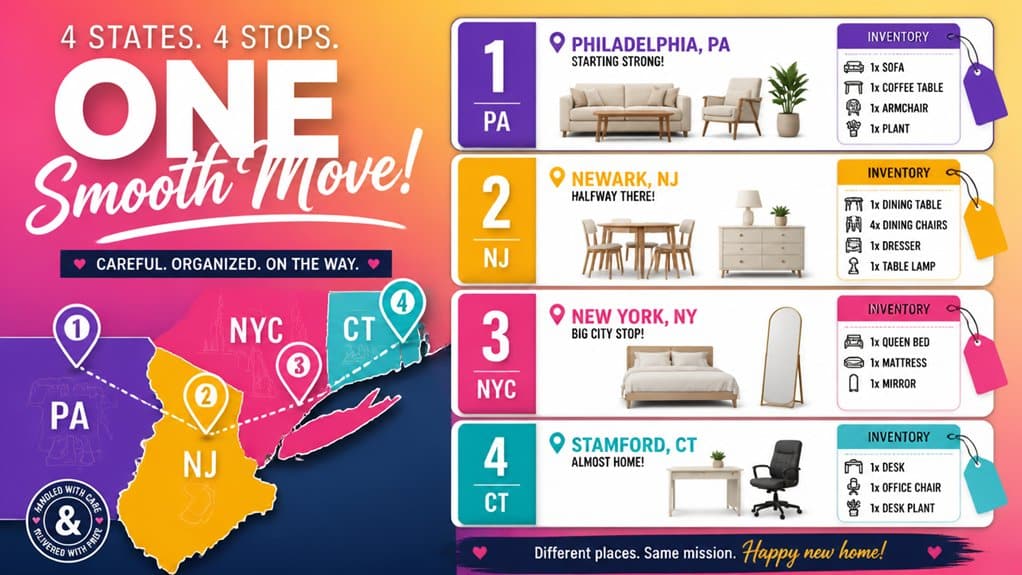
Before loading day, mark each box and furniture piece with the delivery stop it belongs to using a durable label that the moving crew can read easily. Use the same destination name across the shipment so the driver, dispatch, and delivery crew can sort items quickly at each stage.
Keep one master inventory for the full shipment, then separate the items into inventory groups by stop. Every box, appliance, and furniture item should appear on the master list and also be identified by its delivery group. If the move includes more than one address, include the destination name, exact address, and unit number on the label or inventory sheet when available.
Helpful label details for each item:
- delivery stop name or code
- exact address and unit number
- receiving contact for that stop
- brief access note if needed
- whether the item is fragile or high value
Keep fragile or high-value pieces clearly identified within the correct delivery group so they are not mixed with the wrong stop. If a piece belongs with a later delivery, make that obvious on the label and on the inventory list.
If you have multiple stops, organize the labels in the delivery order the crew should follow. This makes it easier to verify what stays on the truck, what is unloaded first, and what should be held for the next destination.
Double-check that every label matches the move plan before the shipment leaves so the driver does not have to sort unclear items at delivery.
Plan Delivery Order Access and Receiving Contacts
Set the delivery order before move day so the mover, driver, and receiving contacts know which stop comes first, second, and so on. For a cross-country split shipment, match the sequence to the exact destination for each group, especially if one stop is a home, storage unit, temporary address, or final residence.
List the full address and unit number for every stop, along with the best receiving contact for that location. The MoveEast dispatch team should be able to confirm who will meet the delivery crew, who can approve placement, and who should be reached if the schedule changes. If more than one person may receive a stop, note the primary contact and a backup contact.
Include access notes for each destination. That may cover gate codes, elevator access, loading area instructions, parking details, or any other site-specific information the moving crew needs to reach the correct stop without delay.
If two deliveries go to different buildings or parking areas, document those separately so the driver does not need to sort it out on arrival.
If the shipment is being delivered in stages, keep the instructions tied to each delivery group, not just to the overall move. The crew should be able to match the right inventory group with the right stop and the right contact person.
If any fragile or high-value pieces are going to a particular destination, make sure those items remain clearly identifiable within that delivery group so they can be handled and delivered with the correct stop.
Coordinate Delivery Windows Across Multiple Stops
If your shipment is split across multiple stops, coordinate each delivery window separately so the right people are available at each address. Treat the Earliest Delivery Date as the starting point for scheduling, not a fixed appointment. MoveEast’s published policy says a ready-for-delivery shipment can fall within a 5 to 15 calendar day delivery time frame, and the office typically makes delivery arrangements at least 24 to 48 hours before delivery.
Confirm which stop is first, which items are going to each address, and who will receive them. The delivery crew should have clear instructions for every stop, including any access notes, contact names, and alternate phone numbers.
If one stop depends on another—for example, if furniture is needed before boxes are unloaded—tell dispatch early so the crew can sequence the drops in the right order.
For each address, document the delivery preference in writing:
- delivery address and unit or room number
- recipient name and phone number
- whether the customer or an authorized third party will be present
- the Earliest Delivery Date or preferred delivery day
- any timing constraints tied to work hours, building access, or travel plans
- items assigned to that stop
If you need a firmer commitment on timing, ask MoveEast whether a delivery appointment can be confirmed in advance for that stop. A confirmed delivery window is different from a guaranteed delivery date, and it should be recorded separately from any estimate.
If the shipment qualifies for MoveEast’s Guaranteed Delivery Date service, remember that only the date is guaranteed under that service, not the delivery time.
For split deliveries, keep the calendar flexible around the estimated window. Since the delivery crew may arrive within the published timeframe and the office may confirm details only 24 to 48 hours before delivery, make sure each stop can receive the shipment when the driver calls.
If someone else will accept delivery, verify that the authorized third party is ready for that specific stop and knows what to sign or inspect on arrival.
When Storage Is Needed Between Split Deliveries
If your shipment has to pause between pickup and final delivery, MoveEast can store the goods during that gap and release them when you are ready for the next leg. For qualifying long-distance jobs, published policy includes one month of free storage counted from pickup and including storage-in-transit time. If the shipment remains in storage beyond that period, published storage charges apply.
When you know the split delivery will need storage, contact the office and dispatch in advance. Before delivery, contact the office when you are ready for delivery and complete the Storage Release form so the driver and delivery crew can coordinate the next step.
Destination-storage and other storage options have their own published terms, so the move should be scheduled around the actual release request.
For a split shipment, keep clear records of what is going into storage and what is coming out later. Confirm which pieces stay with MoveEast, which items will be delivered first, and which items will remain stored until the second drop.
If the destination address or receiving conditions change, document that with the office so the dispatch team can match the right shipment to the right delivery.
If you need access to items while they are stored, remember that MoveEast storage is not the same as self-storage. Access follows a published appointment process, so coordinate any visit or retrieval request through the office.
Final Split Shipment Checklist Before California Pickup
Before the California pickup, make sure the split shipment is organized so the moving crew can load it in the correct order and dispatch can confirm each stop.
Keep one master inventory for the full shipment, then divide it into separate inventory groups for each delivery stage or destination.
Check that every group is clearly labeled with the correct destination, delivery order, and any unit number or exact address tied to that stop. If the shipment includes multiple stops, each group should be easy to identify at pickup so nothing gets mixed between the California load and the later delivery groups.
Use durable labels on boxes and furniture pads so the driver and delivery crew can see which items belong together. This is especially helpful for fragile or high-value pieces, which should remain identifiable within the correct delivery group throughout the move.
Confirm the pickup details that will guide the rest of the shipment:
- exact California pickup address and any unit, suite, or access notes
- planned delivery order for each stop
- receiving contact names and phone numbers for every destination
- separate parking, building, or dock instructions if they differ by stop
- a copy of the master inventory and each stop-specific inventory group
Before the moving crew arrives, review the paperwork so the shipment structure matches what was agreed in the MoveEast quote or service terms.
If anything about the split delivery, timing, or charges is unclear, confirm it before pickup rather than after the truck is loaded.
At pickup, walk through the labeled groups with the driver or dispatch contact and verify that each destination is documented correctly.
If items are being held for a later stop, keep those pieces separated clearly from the first delivery group.


