

For a winter move from Los Angeles to New York, check conditions at both addresses, keep cold-weather essentials with you and share building restrictions with your moving company early. A mild departure day in Southern California does not tell you what your new home's entrance will be like when your belongings arrive.
Moving in winter involves two separate plans: the company's arrangements for your household shipment and your own travel and home preparation. Start with your work and housing dates, then discuss the available moving services with your coordinator.
In this guide
Plan Your Winter Move With the Moving Company
When comparing cross-country movers in Los Angeles, give each the same inventory, addresses and building requirements. Ask who will pack, what the estimate includes and how you will receive updates. Check availability for your actual dates before arranging time away from work.
California New York Express Movers schedules and confirms delivery with you. Share elevator hours, loading entrances, holiday closures and any dates you cannot receive your shipment. Review the delivery policy with your coordinator if a work start or lease handover depends on a particular date.
Keep personal travel flexible where you can. Your flight or road trip and your furniture's arrival may happen on different days. If there is a gap between leaving Los Angeles and getting keys in New York, discuss temporary accommodation and moving and storage arrangements before booking them.
For the wider task sequence, use our 90-day cross-country moving timeline. The winter-specific checks below fit alongside that plan.

Check conditions at both addresses as your move approaches.
Packing Tips for Moving Belongings in Cold Weather
Before you start packing, agree which items you will prepare and which are covered by professional packing services. Tell the mover about fragile items, artwork or equipment with special handling requirements. For temperature-sensitive items, check the manufacturer's instructions and discuss suitable transport before including them in the shipment.
Use sound boxes, appropriate cushioning and clear room labels. Bubble wrap can cushion fragile items; any temperature-control requirement needs a separate discussion. Pack indoors and keep finished boxes off wet ground while waiting for collection. If a carton gets wet, check its condition and the contents before deciding whether it needs repacking.
Keep towels and cleaning supplies accessible for your own home preparation. Ask the crew about furniture covers and floor protection before moving day. A tarp used to cover goods should not become loose flooring across an entrance. Keep packing supplies and loose wrapping out of the route between the door and the moving truck.
Prepare Walkways and Protect Your Floors on Moving Day
Check the departure entrance in Los Angeles for rain, wet steps, fallen debris and poor lighting. At the destination, ask the building manager who clears snow and ice from the walkway, stairs and loading area. If you are still in California, arrange for someone with access to check the entrance before the appointment.
Confirm that any snow clearing is completed, rather than assuming a building will handle it automatically. Ask whether a shovel and an approved treatment such as salt or sand need to be available, and who will use them. Report an icy entrance or blocked access to the building contact and coordinator promptly.
To protect your floors, agree on suitable floor runners or mats with the building and moving crew. Keep them flat and secure, with doors, handrails and walkways unobstructed. Have a place for wet footwear away from the carrying path. A clear entrance helps everyone move without stepping around bags, boxes or cleaning equipment.

Have access, lighting and a clear entrance ready for the confirmed delivery.
Keep Winter Essentials With You for Your New Home
Pack for the weather you will meet on arrival. Moving during the winter months may mean needing a warm coat and boots immediately, even if you leave Los Angeles in lighter clothing. Put these items in the bag traveling with you:
- Warm layers: a coat, gloves, hat, socks and footwear suited to the forecast.
- Daily essentials: medication, toiletries, chargers and clothing for the period before household delivery.
- Access and contact details: working keys, building instructions, identification and your moving job reference.
- Work and family needs: required devices, important documents and immediate supplies for children or pets.
Before traveling, confirm when heat, electricity and water will be available at the new home. Keep the building contact's number with you if a service is not working. The National Weather Service's winter preparation guidance also recommends planning for interruptions to heat and power.
If you are driving, check road conditions and prepare your vehicle and emergency supplies for your own journey. Allow extra time to get to the destination safely. Arrange another place to stay if the home cannot be occupied; coordinate any resulting shipment changes with the office.
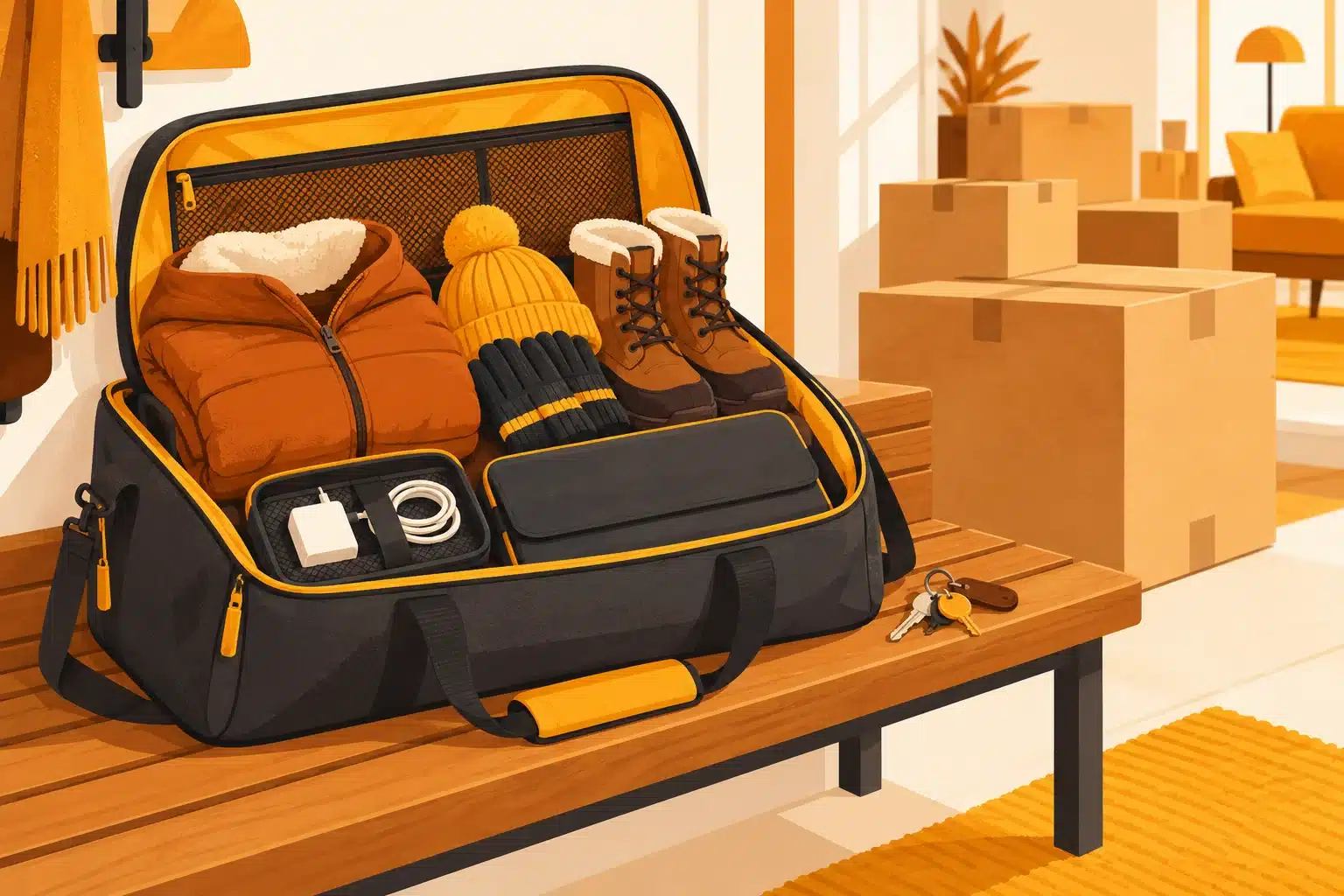
Keep winter clothing and immediate essentials in the bag traveling with you.
Shorter Days and Local Time During the Winter Months
Check exterior lights, entry codes and the route from the unloading area into your home. Daylight is limited during the winter season, so a delivery appointment may involve work after dark. Tell your coordinator about building access limits before the appointment is arranged.
November 2026 planning note: Daylight saving time ends on Sunday, November 1, 2026, at 2 a.m. local time, according to NIST's daylight saving time rules. Check your calendar entries around the clock change. New York remains three hours ahead of Los Angeles: 10 a.m. in Los Angeles is 1 p.m. in New York.
Record appointments in the destination's local time and confirm the time zone for office calls. Ask about available arrangements if you need daylight access. The time you prefer still needs to fit the company's schedule and your building's permitted hours.
What if Winter Weather Changes Your Moving Plans?
Check local forecasts and alerts in the days leading up to your move and before your own travel. Review both addresses; weather conditions along your personal journey may differ again. Use the National Weather Service's location-based forecasts for current information.
If bad weather affects your flight, home access or ability to receive delivery, contact the coordinator as soon as you know. Explain what changed, the affected address and when you expect to be available. If you need to reschedule, confirm availability before changing connected reservations.
For a blocked entrance, road closures or a building shutdown, share the specific restriction and a reliable contact. Ask the office which arrangements are affected and what you should do next. Keep written updates together so an old calendar entry does not become your working plan.
Read our extreme-weather moving guide for broader disruption planning. This LA-to-New York relocation still needs address-specific information; a seasonal outlook cannot confirm conditions on your delivery date.
Does Moving in the Winter Cost Less?
Compare written estimates for your actual winter move. Moving companies price the shipment and services you request, so an advertised off-season saving does not establish your cost. Check packing, access requirements and any storage or other services you need against the same shipment details.
Keep travel, accommodation and overlapping housing expenses in your personal budget. A lower moving quote may not offset an extra stay if your home is unavailable. Our best-time-to-move guide covers the broader date-selection decision.
Request a Winter Moving Quote for Los Angeles to New York
To plan your move this winter, request an estimate from California New York Express Movers with your addresses, inventory, intended dates and known access restrictions. Ask about the arrangements available for your shipment, then prepare your travel bag, home and calendar around the details the company confirms.


