

Moving to Philadelphia from California needs early planning for rowhouses with narrow stairs, tight doors, and limited curb space. A Temporary No Parking permit should be secured several business days ahead, and signs must be posted before moving day. The delivery crew also needs the exact address, carry distance, photos, furniture measurements, and backup property contacts. Landlord or manager rules should be confirmed in writing to prevent delays and extra fees.
Practical takeaway: Confirm permits, access details, and building rules with MoveEast and property contacts before moving day.
Why Philadelphia Rowhouse Delivery Needs Early Planning
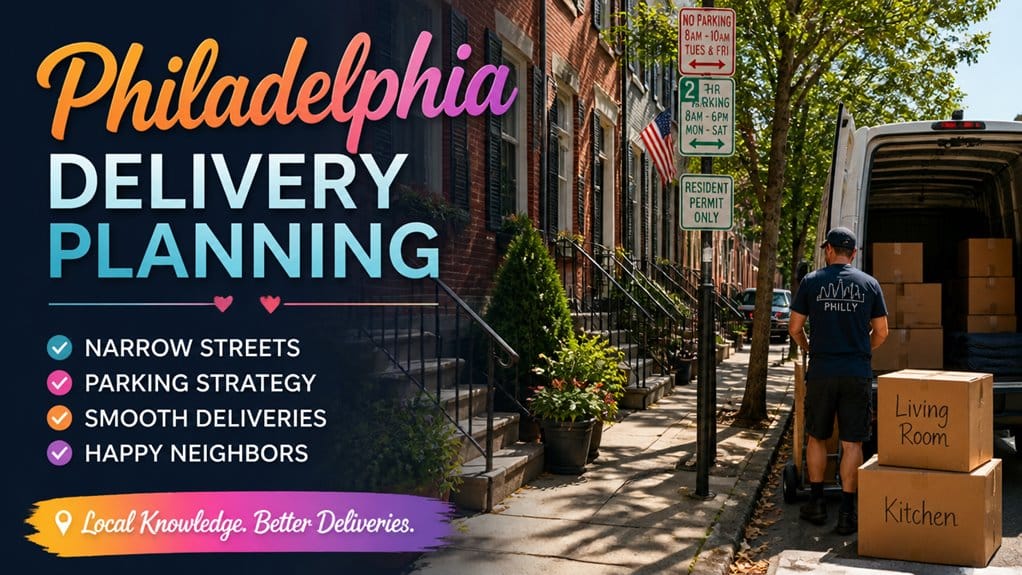
Philadelphia rowhouse delivery often needs earlier planning because approaches can be tight, streets may leave little room for staging, and interior access can be limited by narrow halls, stairs, or older door frames.
MoveEast should review the exact delivery address, unit and floor when applicable, and the preferred and alternate entrances before dispatch so the delivery crew can plan how to reach the residence.
Document curb-to-door carry distance and share street and entry photos in advance. That lets the driver and moving crew judge whether the shipment can come in through the main entrance or whether another access point will be easier.
For large, older, or awkward furniture, the crew should have dimensions of key pieces plus doorway and stair measurements so they can decide whether disassembly may be needed before arrival.
Primary and backup property contacts are important. In a rowhouse or older apartment, access may depend on someone being available to answer questions, confirm the entrance, or help with any on-site changes.
If the primary truck cannot reach the entrance, MoveEast may need to review shuttle or long-carry conditions so the delivery plan matches the real space at the property.
A pre-move checklist for this kind of delivery includes:
- Exact delivery address, unit, and floor
- Preferred and alternate entrances
- Curb-to-door carry distance
- Street and entry photos
- Furniture dimensions
- Doorway and stair measurements
- Disassembly notes
- Primary and backup property contacts
Practical takeaway: Confirm access details and measurements before dispatch so the delivery crew can plan the route and any necessary disassembly. Additionally, hiring professional packers can greatly enhance the overall moving experience, reducing the risk of damage to your belongings.
Truck Parking Temporary No Parking Permits and Street Access
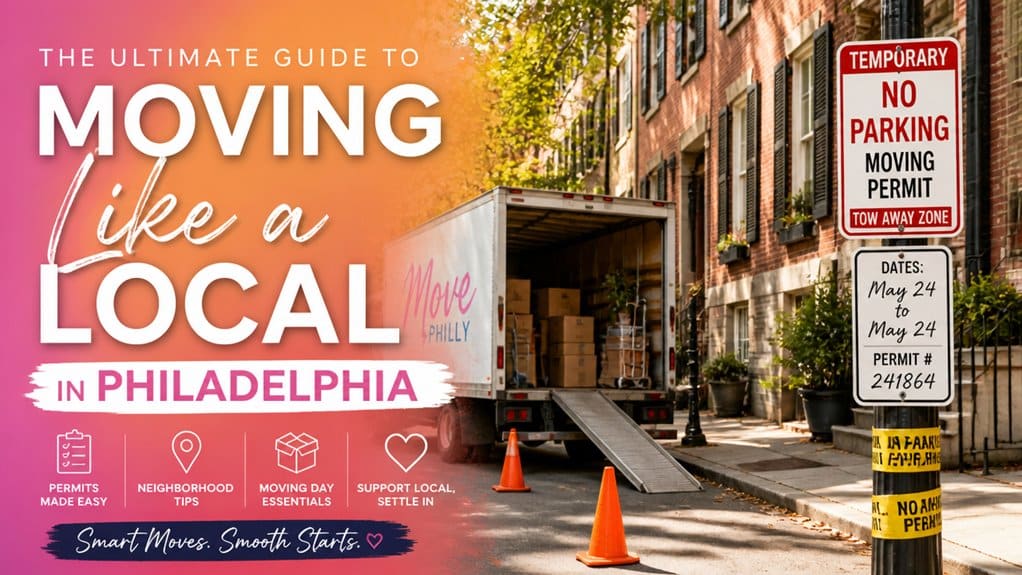
If your move will use street space in Philadelphia, the moving crew should plan for a Temporary No Parking (TNP) permit before the truck arrives. The City of Philadelphia Department of Streets issues these permits and current guidance says the application should be submitted at least four business days before the permit is needed.
If the applicant has not been contacted three days before the permit is needed, the City directs the applicant to contact the Streets Department Right-of-Way Unit. For MoveEast planning, dispatch should build in extra time for permit processing and should not assume street space will be ready without confirmation.
Current City guidance lists the cost for a moving truck as $50 per 40 feet of space per day in Center City or University City, and $25 per 40 feet of space per day in other parts of Philadelphia. The amount depends on where the truck will park and how much curb space is needed, so the move plan should match the pickup or delivery block carefully.
Philadelphia’s TNP system says the local Police District provides Temporary No Parking signs after permit processing. Signs should be posted at least 24 to 48 hours before the move, or as soon as possible after the permit is received. The delivery crew should keep proof of the permit and signs available on move day in case the truck needs to be positioned at the curb.
Checklist for the move crew:
- Confirm whether the move will use Center City, University City, or another Philadelphia location.
- Submit the TNP application at least four business days in advance.
- Follow up if there has been no contact three days before the needed date.
- Confirm where the signs will be issued and when they will be posted.
- Recheck the curb space, date, and time before the moving truck arrives.
Verify current City guidance before publication because permit rules and fees can change.
Rowhouse Stairs Tight Turns Doors and Furniture Measurements
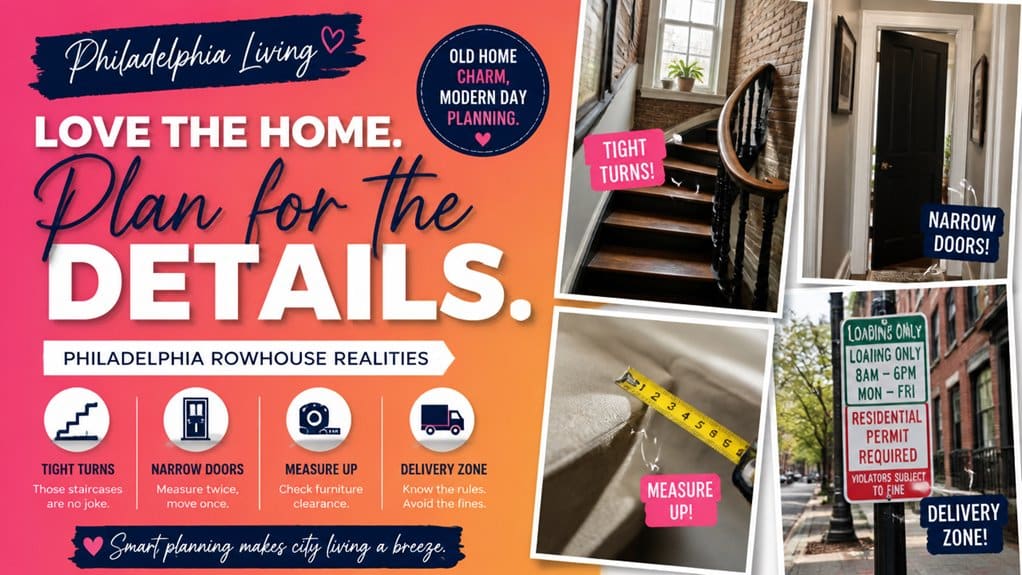
Philadelphia rowhouses often create access challenges during a move: narrow interior stairs, tight turns at landings, small door openings, and limited room for large furniture to pivot. The moving crew should review the route from the truck or staging point to the unit entrance, then continue through hallways, stairwells, and room-to-room paths to see where items may need to be tilted, rotated, or moved by a different path.
Before moving day, document measurements that affect clearance. MoveEast should confirm the width and height of the front door, vestibule, hallway, stairwell, and any basement or rear-entry doors that may be used. Large items such as sofas, sectionals, dressers, bed frames, desks, mirrors, and appliances should be measured in all directions, including depth and any fixed protrusions like handles, legs, or railings that could catch on a turn.
Useful details to share with dispatch or the delivery crew include:
- Door widths and heights at each point of entry
- Stair width, landing size, and any sharp turns
- Ceiling height at landings or under stairs
- Furniture dimensions, especially long or oversized pieces
- Whether items can be disassembled
- Any railings, radiator covers, or low-hanging fixtures along the route
- Photos of the stairway, doors, and turning points
If the route includes very tight turns, the crew may need to compare an item’s measurements against the usable space at the landing or doorway before loading. In some rowhouses, a piece that fits through the front door may still be difficult to carry up or down a stairwell because the turn is too tight for its length or width. Clear photos and measurements help the mover plan the safest order for moving items and identify whether an alternate entrance or staging point should be reviewed.
If the building has basement stairs, rear steps, or an alternate entrance, those paths should be checked for clearance and surface condition. The moving crew may need to know whether the route is straight, angled, or broken by narrow corners, since that can affect how furniture is carried and rotated through the property.
Practical takeaway: Measure doors, landings, stairs, and large items and share photos so the crew can plan routes and rotations. Proper loading techniques can also enhance safety and efficiency during the moving process.
What to Confirm With a Landlord or Building Manager
Before the move, confirm the building’s exact move-in requirements with the landlord, property manager, or doorman team. For a Philadelphia shipment, details can vary by apartment, condominium, co-op, or managed building, so MoveEast should not rely on general city assumptions.
Ask for the approved move window, the preferred or service entrance, and any loading-dock or freight-elevator instructions. If the building needs elevator reservations, floor protection, doorway protection, security check-in, keys, or access codes, get those instructions in writing and share them with your moving crew and dispatch.
Confirm the exact street address, unit, floor, and the best contact person for move day. If there is a backup contact, include that too in case the delivery crew cannot reach the primary contact.
If the building requires a Certificate of Insurance, send MoveEast the building’s COI requirements or a sample COI before pickup or delivery planning is finalized so the team can coordinate the paperwork the property wants to see.
If the customer will not be present for delivery, arrange a Third Party Authorization in advance so the shipment can be released to another person. Without that authorization, the delivery crew should not assume someone else can accept the delivery.
For any restriction that may depend on the building, move date, or shipment, confirm it directly with property management and document the answer before the mover arrives. It is also essential to understand the insurance and protection options available to safeguard your belongings during transit.
Practical takeaway: Confirm and document all building-specific move requirements and contacts, and share them with MoveEast and the delivery crew.
Delivery Day Plan for a California to Philadelphia Shipment
On delivery day, keep the shipment contact-ready from the Earliest Delivery Date. That is the first date you or an authorized third party can accept delivery under MoveEast’s published process. If your plans change, update MoveEast as early as possible so dispatch can work from the correct delivery timing.
For a California to Philadelphia shipment, the goal is to make sure someone can accept the delivery when the crew arrives. If you are using a building, warehouse, or other receiving location in Philadelphia, confirm in advance that it can take the shipment on the Earliest Delivery Date and during the delivery window MoveEast provides. Have the name and phone number of the person who will meet the delivery crew, along with any access instructions the crew should have before arrival.
Use the timing you receive from MoveEast correctly:
- treat the requested date as the date you want;
- treat the Earliest Delivery Date as the first date the shipment can be accepted;
- treat any estimated timing as not yet a confirmed appointment;
- treat a confirmed delivery window only as confirmed once MoveEast has given it;
- use “guaranteed” language only if your booking paperwork or the applicable MoveEast service clearly provides it.
If you are ready for immediate delivery, MoveEast’s current scheduling FAQ says the shipment may arrive within 5 to 15 calendar days. If you need a guaranteed delivery date service, ask at booking and keep the written paperwork with your records so you can match the delivery timing to the service arranged.
Before delivery, keep these details easy to reach:
- the Earliest Delivery Date and any later confirmed delivery window;
- the name of the person authorized to accept the shipment;
- the best phone number for the delivery crew to use;
- any delivery instructions already shared with dispatch.
When the driver or delivery crew is approaching Philadelphia, stay reachable so the team can confirm arrival timing and coordinate the handoff. If you are not the person receiving the shipment, make sure that person understands they may need to be available for the full delivery window, not only for the requested date. Additionally, ensure that your moving day preparation is thorough to facilitate a seamless transition.
Common Mistakes That Delay Philadelphia Deliveries
Delays often start with incomplete access details. The moving crew should have the exact delivery address, unit number, floor level, and the best entrance to use before the truck arrives. In older rowhouses and apartment buildings, a front door, side door, rear alley entrance, or interior lobby path can change how quickly the crew reaches the home.
Not measuring the path from curb to door can slow unloading. Narrow streets, tight sidewalks, shared entries, steep steps, and small landings may require extra time even when the truck is parked nearby. MoveEast should review doorway widths, stair turns, and any low ceilings, because furniture that fits in a truck may still need to be disassembled to pass through the building.
Photos help prevent last-minute surprises. Street and entry photos and pictures of tight corners, railings, or steps can show whether the truck can get close enough to the entrance or whether a long carry may be needed. If the property is on a narrow block, dispatch may need to plan for a shuttle or a longer carry when the primary truck cannot reach the door.
Missing contact information also causes delays. The crew should have a primary property contact and a backup who can answer questions on arrival, confirm access, and help resolve issues at the building or curb. If a building manager, super, or neighbor controls a gate, lobby, or service entrance, that should be confirmed in advance.
Unmeasured furniture is another common problem. Large sofas, dressers, beds, and tables may need disassembly before moving day if the stairwell or doorway is tight. MoveEast should know which pieces come apart, which hardware is with them, and whether any items need reassembly at the destination.
To avoid delays, customers should prepare these details before delivery:
- exact delivery address, unit, and floor
- preferred and alternate entrances
- curb-to-door carry distance
- street and entry photos
- furniture dimensions
- doorway and stair measurements
- disassembly notes
- primary and backup property contacts
Practical takeaway: Document access, measurements, photos, and contacts before delivery.
Final Checklist Before the Truck Leaves California
Before the truck leaves California, make sure MoveEast has a complete destination profile for the Philadelphia address. The delivery crew should have the exact street address, unit number, floor, and the best way to reach the entrance.
For a rowhouse, older apartment, or narrow urban block, confirm whether the crew should use the front door, rear entry, alley access, or another preferred entrance.
Send clear photos of the destination street and building entry, along with any tight turns, stoops, gates, shared hallways, or overhead obstacles the driver may need to account for.
If the walk from curb to door is long, document that distance so the mover can plan for carrying items by hand if the truck cannot park close to the entrance. If shuttle service or a long carry may be needed, MoveEast should review that before departure.
Measure furniture likely to create issues on arrival, especially sofas, sectionals, bed frames, dressers, dining tables, appliances, and any item that cannot be turned easily.
Also measure doorways, stair width, stair turns, and elevator dimensions if applicable. Compare those measurements with the pieces that need to move in, and note which items should be disassembled before loading.
Confirm access details with both the primary and backup property contacts. The moving crew may need someone available to answer the phone on delivery day, open an entrance, or clarify where the truck can stage.
If the destination has narrow streets or a tight curbside setup, make sure the driver and dispatch have the same contact information and the same access notes.
Checklist:
- Exact delivery address, unit, and floor
- Preferred and alternate entrances
- Curb-to-door carry distance
- Street and entry photos
- Furniture dimensions and disassembly notes
- Doorway, stair, and landing measurements
- Primary and backup property contacts
- Any known access concerns that may affect unloading
Practical takeaway: Keep these details organized and ready to share again if the route, truck timing, or delivery setup changes before arrival.


