

Choose short-term storage for a temporary gap between homes; choose long-term storage when your belongings may stay packed for several months or longer. For a California–New York move, deciding between short-term and long-term storage starts with when your home will be ready, what you need to retrieve, and what the complete arrangement will cost.
A holiday move can make those answers less certain. You may be staying with family, waiting for a lease to begin, or finishing work on your new home. Start with those circumstances, then compare short-term and long-term storage terms before booking.
Short term vs long term storage: key differences
The main difference is your expected storage period. Short-term storage typically lasts days, weeks or a few months. Long-term storage covers an extended period. Providers define these labels differently, so a three-month or six-month cutoff is not a rule that applies to every storage service.
| Decision | Shorter stay | Longer stay |
|---|---|---|
| Likely use | A temporary delay before a confirmed move-in | A renovation, extended assignment or home search lasting several months |
| Main priority | A workable release and delivery plan | Ongoing affordability, protection and extension terms |
| Access | Keep anything needed soon outside the shipment | Decide which items you may need during later seasons |
| Cost comparison | Check minimum charges and handling fees | Check recurring charges, rate changes and notice requirements |
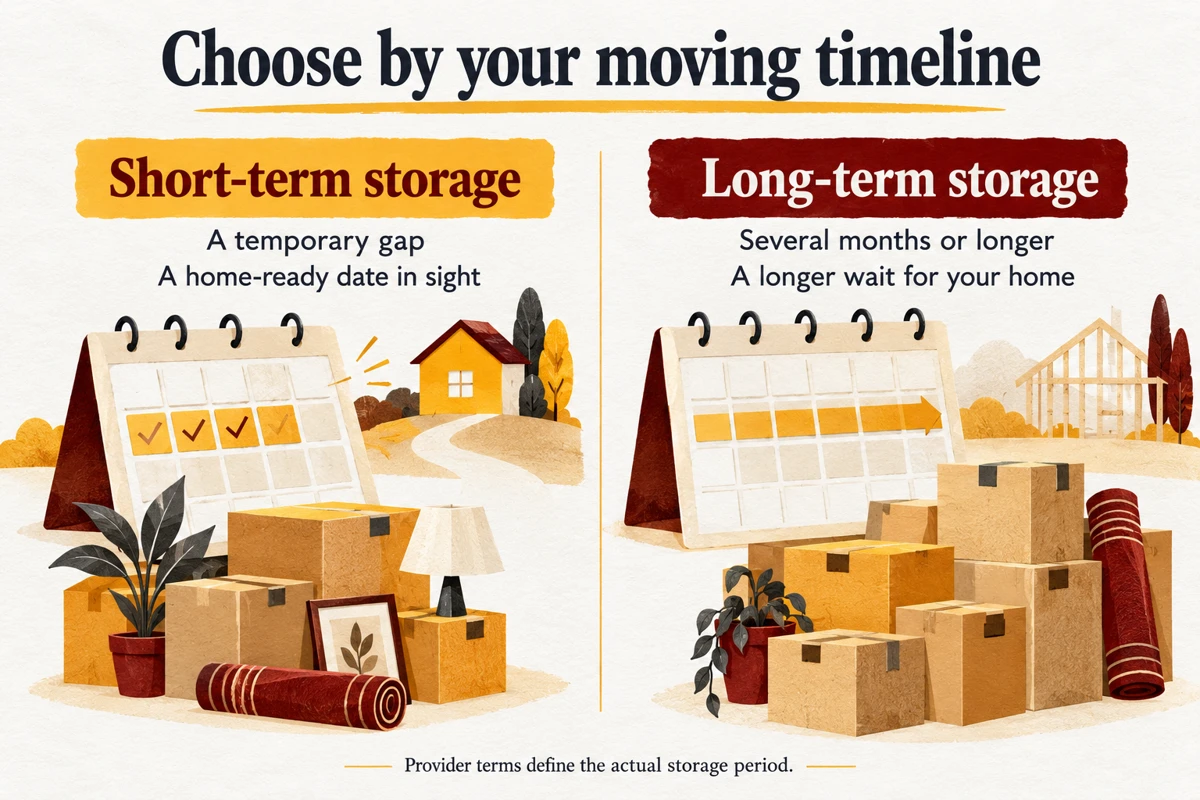
Choosing the right storage solution for your move
Write down what must happen before you can receive the shipment. A date is more useful when you know what supports it: signed possession arrangements, completed repairs or approval to move into the building.
- A short, confirmed gap: You need storage for a few weeks while waiting for an agreed possession date. Ask how much notice is needed to release the goods.
- An uncertain gap: You are still looking for a home or a renovation has no reliable finish date. Compare an initial stay with an extension, rather than budgeting only for the hoped-for end date.
- A longer change: You plan to downsize, renovate or spend months in furnished accommodation. Choose long-term storage terms that suit the likely stay and the items you will need along the way.
Your storage needs include access as well as time. The right storage solution should fit both. If you need to store most furniture but will use work equipment each week, separate that equipment before pickup. Flexible storage means an arrangement that can accommodate your actual plans; it does not automatically mean unrestricted access or no notice.
Short-term and long-term storage costs: what should you compare?
Compare the complete cost for the same inventory and expected dates. A lower monthly rate does not establish cost savings if it comes with a minimum stay, extra handling or a long-term contract you will not need.
Ask each provider to explain these points in writing:
- Whether charges depend on shipment volume, storage space or a rented storage unit.
- Any minimum charge, included period, taxes or required protection charges.
- How a partial month, extension or rate increase is calculated.
- Whether collection, transfer, access and final delivery are included or separate.
- What notice is required to end the arrangement and which date stops storage billing.
Price two realistic scenarios: your expected stay and a longer stay if your home is delayed. Use the same belongings in both comparisons. This makes the differences between short-term and long-term costs easier to assess without relying on a promotional first-month figure.
California New York Express Movers publishes its current storage fees and policies. Confirm the applicable included period, billing and release terms for your shipment with the company before making a cost comparison.
Short-term storage for a holiday gap between homes
Suppose you leave California before Thanksgiving and your New York home becomes available in December. Your personal arrival date and household delivery arrangements are separate. Tell the moving company when the home will be available and ask how storage fits the move.
For this example, your preparation is to:
- Confirm the earliest date you can accept the shipment at the new address.
- Discuss that date, any uncertainty and the required release notice with the company before pickup.
- Set aside clothing, documents and everyday supplies for your stay away from the shipment.
- Notify the company if possession or building access changes.
The company schedules delivery with you under the agreed terms. A key handover, flight reservation or holiday gathering does not reserve a truck delivery. If the home is not yet confirmed, explain that uncertainty instead of treating a preferred date as guaranteed.
This example illustrates a planning decision, not a holiday service promise. For family travel and authorized receiving arrangements, use the separate Thanksgiving moving preparation guide.

Self storage or a moving company’s storage service?
Duration and storage format are different choices. Self storage, mover-managed warehouse storage and portable storage can have different access and handling arrangements. A storage container may stay at a property or be held elsewhere; ask where your items are stored and how they reach the final address.
If you rent a storage unit, check the facility’s access conditions and how you will transport your items. When comparing storage facilities, do not assume every facility allows the same visits, collection vehicles or delivery arrangements. For self-storage unit size guidance, see how to choose the right size storage unit.
Can you retrieve items while they are stored?
California New York Express Movers’ storage is not self-storage: its published policy requires an appointment and accompanied access, with access charges. Check the current procedure before you plan to retrieve individual items. Keep seasonal items like winter coats, work materials and documents you need soon out of the household shipment.
Do you need climate-controlled storage?
A longer stay does not automatically include climate control. Ask about the actual environment and any restrictions for sensitive items before selecting a storage solution. Discuss items like wood furniture, artwork or electronics with the provider; do not assume that all climate-controlled units provide the same conditions. The separate climate-control guide explains that choice in more detail.
For either duration, make an inventory and discuss appropriate packing before you store your items. If you intend to store seasonal items, identify the ones you will need before the full shipment is delivered. Store items only after checking what the provider accepts. The storage preparation guide covers the packing task without turning this duration comparison into another packing checklist.
Getting ready for delivery from storage
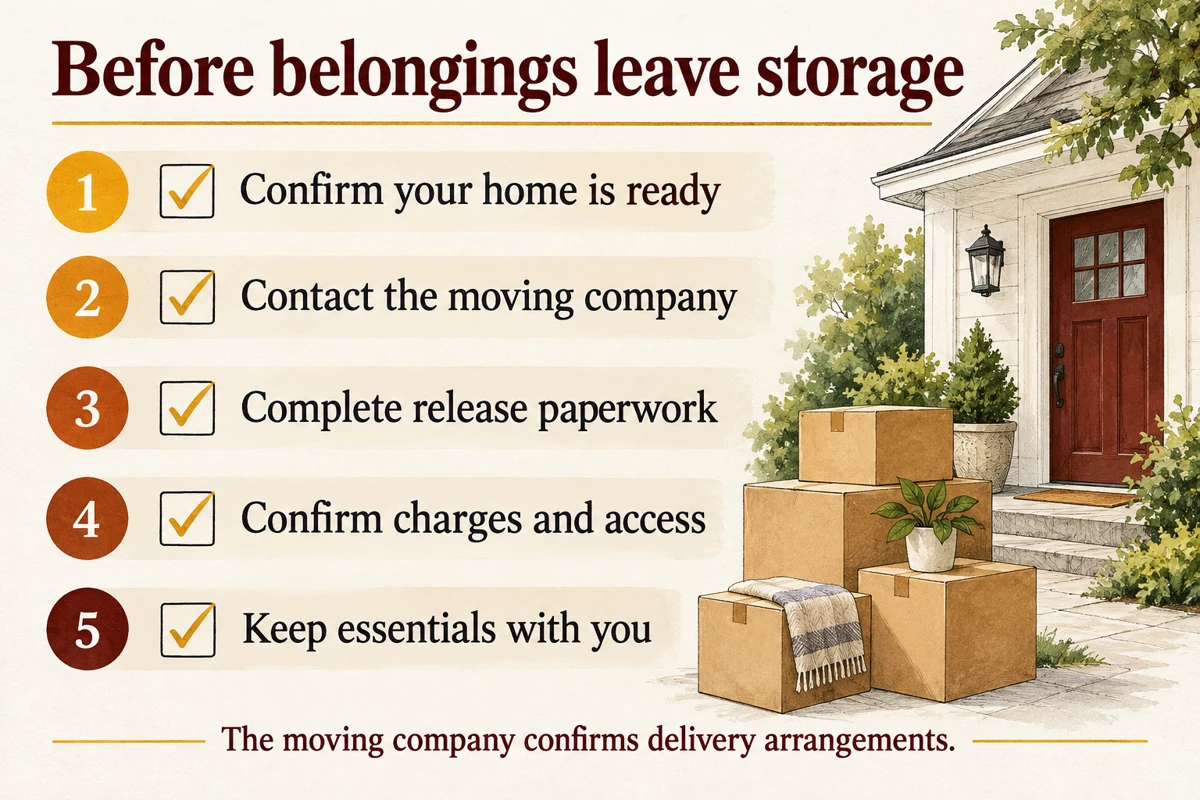
Contact the company before your home is ready. California New York Express Movers’ published policy asks customers to contact the office at least 15 days in advance and complete a storage release form. Review the out-of-storage delivery policy with the office; an earliest requested date is not a confirmed delivery appointment.
Before requesting release, confirm your possession date, delivery address, building access and who can receive the belongings. Ask the company which charges and paperwork must be settled. Its storage options page explains pickup-city and destination-city arrangements; confirm which applies to your shipment.
If a temporary stay becomes much longer, ask whether the storage agreement or protection arrangements change. FMCSA explains that storage-in-transit can convert to permanent storage, with notification requirements and changes in responsibility. That formal distinction is separate from the everyday labels “short-term” and “long-term.”
Frequently asked questions about storage plans
Can short-term storage be extended if my home is delayed?
Ask about extensions before you book. If you need short-term storage but your move-in date changes, find out how to request more time, what it costs and whether any documents must be updated. A month-to-month arrangement may suit changing plans, but check its actual minimum stay and notice terms. Do not assume a short booking can be extended for as long as you need.
Can I store only the items I will not need in my new home?
Discuss that inventory before pickup. If you want to declutter your home or keep some furniture packed after a relocation, ask whether the provider can handle the specific collection and delivery arrangement. Short-term needs and ongoing storage may require different plans. Confirm the handling and cost before separating the shipment; do not assume individual boxes can be released on demand.
Choose short-term or long-term storage before pickup
Bring three details to the conversation: your likely home-ready date, the belongings you plan to store and anything you may need during the wait. Contact California New York Express Movers to discuss the applicable storage options and a written estimate for your relocation. A clear starting plan is useful whether you need short-term or long-term storage, especially when holiday travel and possession dates overlap.


