

A California to Connecticut move works best with early planning. The resident should confirm delivery access, elevator rules, and any condo COI requirements before the truck arrives. DMV tasks should be started within 90 days, including license transfer, emissions testing, and VIN verification. Delivery timing should match lease or closing dates, and storage should be arranged if the home is not ready. A clear checklist helps prevent delays, and more useful details follow below.
First Things to Handle After a California to Connecticut Move

The first priority after a California-to-Connecticut move is to make the delivery site easy for the moving crew to access. Before the shipment arrives, confirm the exact building address, loading entrance, elevator access, and any check-in steps the property manager expects.
For managed condos and apartments, ask whether the delivery must go through a service entrance, whether the elevator needs to be reserved, and where the crew should park while unloading. For suburban homes, review driveway access, street restrictions, and the best place for the truck to stage.
If the property requires arrival paperwork, gather it early and keep it with your move documents. That can include a move-in form, building contact list, access instructions, elevator reservation confirmation, or delivery appointment details.
Send the relevant information to MoveEast dispatch so the driver and delivery crew have the same instructions your property management team has.
Use a simple pre-delivery checklist:
- Confirm the delivery date and time window with MoveEast dispatch.
- Verify the destination address and any unit, building, or gate codes.
- Share property manager contact details and on-site instructions.
- Reserve elevators or service access if the property requires it.
- Clear the path from the entry point to the main rooms.
- Decide where boxes, furniture, and storage items should go first.
- Keep move paperwork, ID, and contact numbers easy to reach.
If your shipment is arriving before the home is ready, coordinate storage timing before delivery day. A short storage period may help if the unit is not fully accessible, the elevator is unavailable, or the closing and move-in dates do not line up.
Confirm where the shipment will be held, when final delivery can be scheduled, and what the handoff process will look like once access is approved.
On delivery day, have one person available to meet the driver or delivery crew, review access instructions, and direct placement of household goods.
Walk the destination with the crew if needed so they understand which rooms are ready, which areas are still blocked, and where fragile items should be placed. If the property has floors that need protection or requires a particular route for moving in, confirm that detail in advance with management.
After the furniture is inside, focus on final move-in preparation: place essential items first, check that major pieces are positioned where you want them, and note any missing or damaged items right away so they can be documented with the mover.
Keep your delivery paperwork and inventory list until everything is unpacked and the home is set up.
Connecticut DMV License Registration and Address Updates
If you are establishing Connecticut residency, plan your DMV steps early so your move-in timeline stays on track.
Connecticut DMV currently says you have 90 days to transfer an out-of-state driver’s license and 90 days to transfer an out-of-state vehicle registration after residency begins.
For a driver’s-license transfer, expect to bring your current out-of-state license, acceptable identification, completed Form R-229, payment, and any other documents that apply to your situation.
Connecticut DMV also requires an in-person appointment and a vision test as part of the standard process. If your situation is unusual, the DMV may ask for additional documentation, so confirm what applies before your appointment.
For a vehicle-registration transfer, Connecticut DMV currently says the service is appointment-only.
Depending on the vehicle and your circumstances, you may also need emissions testing and/or VIN verification, along with the required documents for the transfer.
Confirm the current DMV requirements before you schedule.
Condo COI and Building Access Checklist
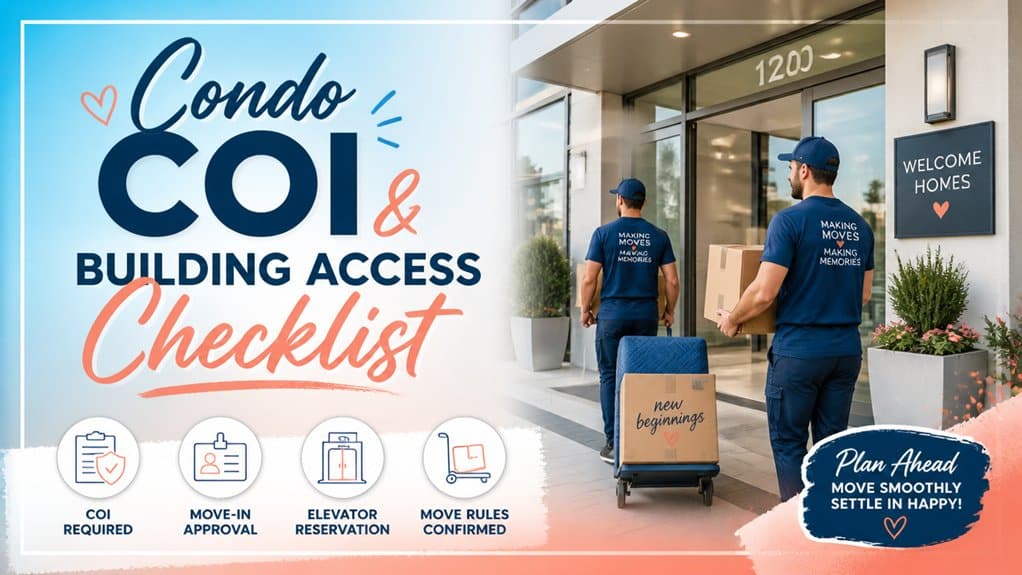
For a condo move, start by confirming the building’s access requirements with management or the property contact. Ask whether the move must happen during approved hours, which entrance the moving crew should use, and whether there are any check-in steps with security, the front desk, or a vendor desk.
If the building requires keys, access codes, or an on-site contact to open doors or provide access, document that in advance so MoveEast can coordinate with dispatch and the delivery crew.
If the property asks for a Certificate of Insurance before movers can enter or use building facilities, request the exact certificate holder name, any additional insured wording if required, the submission method, and the deadline from management.
Do not assume a standard format from another building will work here. Have MoveEast submit the COI only after you confirm the building’s current requirements.
If the condo uses a freight or service elevator, confirm whether a reservation is required and, if so, the date and time window that has been approved.
Also verify the elevator opening, interior dimensions, posted capacity, the approved loading route, any pad or wall protection rules, and whether building staff must be present to provide access. This information helps the moving crew plan the order of loading and avoid delays at check-in.
Before move day, keep a written record of the building’s instructions, the name of the person who provided them, and any confirmation numbers or emails.
Include the approved entrance, elevator reservation details, COI submission status, and any access codes or escort instructions.
Elevator Reservation Loading Access and Move In Timing
For a condo move in Connecticut, the moving crew should confirm the building’s elevator reservation and loading access before arrival. Managed properties may require a service or freight elevator booking, a specific move window, and check-in with building staff or security.
MoveEast should verify the reservation date and time, the approved entrance or loading route, and whether the driver needs to use a particular dock, service door, or access code.
It also helps to confirm the elevator details that affect move-day handling: door opening size, interior dimensions, posted capacity, and whether protective padding is required.
If building staff must provide elevator access, the dispatch team should document who will be on-site and when access begins. If the property has rules for doorway or floor protection, the crew should plan for those before the first load is brought in.
Timing matters as well. Some buildings limit moves to certain hours or require the shipment to start and finish within a scheduled window.
MoveEast should ask the property contact whether the move-in time is flexible, whether early arrival is allowed for staging, and what happens if the crew reaches the building before the reserved slot. If a loading dock or service entrance is shared, the driver should confirm where to wait and how the crew will be admitted without blocking other residents or vendors.
Before move day, keep written confirmation of the reservation, access instructions, and any building contact numbers. That record helps the driver and delivery crew coordinate on arrival and avoid delays at the lobby, dock, or elevator.
How to Coordinate Delivery Windows With Lease or Closing Dates
For a condo move in Connecticut, plan the delivery window around both the building’s move date and MoveEast’s delivery timing, not just the day you hope to receive the shipment. If you want delivery as soon as possible, MoveEast’s published policy states an estimated delivery time frame of 5 to 15 calendar days, counted from the Earliest Delivery Date. That is an estimate, so use it to coordinate, not as a guaranteed appointment.
If your lease start, closing date, or condo move-in slot falls within a narrow window, compare it against the Earliest Delivery Date first. Then allow time for MoveEast’s office to make delivery arrangements, which the company says are confirmed at least 24 to 48 hours before delivery. Do not treat the shipment as fixed until the confirmed window is provided.
If you need a firmer date for a condo handoff, MoveEast also publishes a Guaranteed Delivery Date service, subject to availability and an additional charge. Under that service, only the delivery date is guaranteed, not the delivery time.
So if your building requires delivery on a specific day, document that day as the required date, but expect the time of day to be arranged separately.
A practical way to coordinate is to keep three dates in view:
- the lease start or closing date
- the Earliest Delivery Date for MoveEast
- the building’s available move-in or delivery window, if applicable
Before the move, confirm that either you or an authorized third party can be present to accept delivery. If your schedule is tight, make sure the person receiving the shipment is available on the confirmed day and can stay reachable when MoveEast gives the 24 to 48 hour delivery arrangement notice.
Storage Timing When the Shipment and Home Are Not Ready Together
When the condo closing, elevator booking, or move-in approval does not line up with the shipment arrival, coordinate the timing with MoveEast as soon as the gap becomes clear. For qualifying long-distance jobs, MoveEast includes one month of free storage, counted from pickup and including storage-in-transit time. If the shipment will need to remain in storage beyond the included period, published storage charges apply.
Before the delivery date, contact the office in advance once you are ready for delivery and complete the Storage Release form. This lets MoveEast confirm the release and plan the next step with the delivery crew.
Storage access follows MoveEast’s appointment process, so do not plan to retrieve items on your own.
For a condo move, keep the building and moving schedule aligned with the release timing. Confirm when the unit will be ready for delivery, note any hold or delay from the building side, and update your MoveEast office contact if the date changes.
If the shipment will stay in storage longer, ask the office which storage option applies and what steps are needed to arrange delivery when the home is ready.
Final California to Connecticut Move In Checklist
Before MoveEast arrives, have the destination address, contact name, and building access instructions ready so the dispatch team and delivery crew can coordinate the final approach without delay.
For a California to Connecticut household move, the last step is usually confirming who will meet the crew, where the shipment should be received, and whether the property requires a specific arrival window or check-in procedure.
Use this final checklist to prepare the move-in:
- Confirm the delivery address, unit number, and best contact number for the day of delivery.
- Recheck property access details, including gate codes, concierge instructions, loading-area directions, and any service-entry rules.
- If the building uses an elevator or loading dock, confirm the reservation time and whether the crew needs to check in on arrival.
- Make sure the path from the truck to the unit is clear enough for cartons, furniture, and appliance handling.
- Set aside keys, access cards, and any paperwork the management team wants reviewed at move-in.
- Identify where the delivery crew should stage items if the unit is not immediately ready for unloading.
- Confirm the time the shipment can be received if the property has limited delivery hours.
- Keep documents for the shipment, inventory, and any condition notes accessible for the final walk-through.
- Review storage timing if part of the household goods are remaining in short-term storage before final delivery.
If the destination is a managed condo, apartment, or suburban home with shared access, confirm the building or community rules before delivery day rather than relying on a past move or another property’s process.
Some Connecticut properties may require advance coordination for elevator use, service entrances, or delivery staging, while others may allow a simpler curbside or driveway approach.
On delivery day, plan to be available or to designate someone who can receive the shipment, direct the moving crew, and sign off on placement as needed.
If any items are going into storage first, confirm which cartons or furniture pieces should be separated so the driver and crew can keep the delivery, storage, and final move-in plan aligned.
A few final checks can prevent delays at the door:
- Test phone access for the delivery window.
- Save the destination manager’s contact information.
- Keep a clear path inside the home or unit.
- Be ready to identify where each room’s items should go.
- Inspect major items as they are unloaded and note any exceptions immediately.


