

A CA-to-NYC building manager packet should include the mover’s active general liability, workers’ compensation, and cargo insurance certificates. The COI must list the correct building owner, management company, and additional insured parties. It should also provide delivery dates, truck size, driver contact, crew count, dock instructions, and freight elevator reservations. Written estimates should explain delay, storage, and access fees. Early confirmation with management helps prevent missed delivery windows. The sections below explain each requirement in detail.
Verify MoveEast Coverage and Insurance
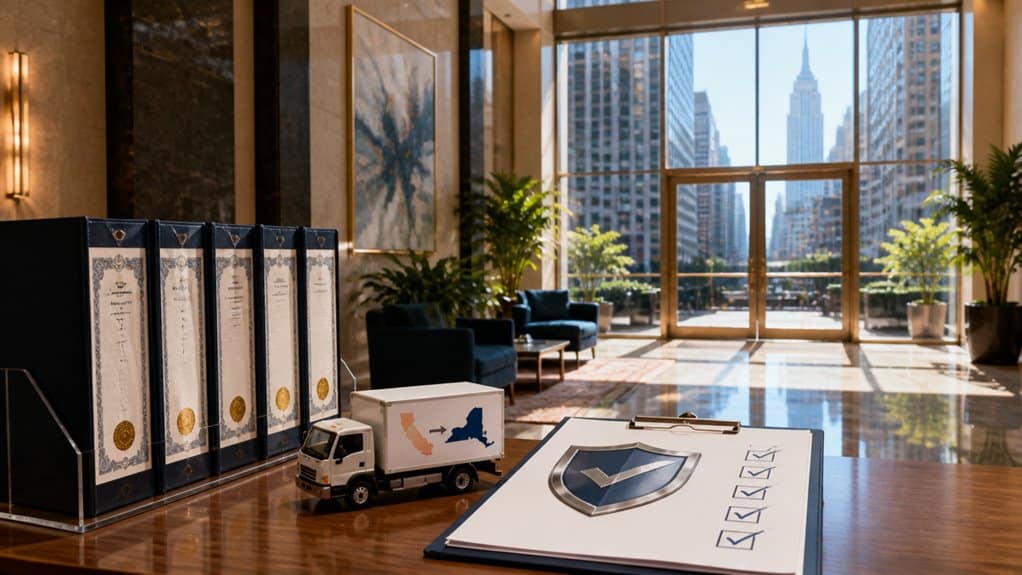
Before MoveEast arrives, the building manager should verify that the company carries current general liability, workers’ compensation, and cargo insurance. Insurance verification helps protect the property, residents, staff, and movers if an accident, injury, or loss occurs during the relocation.
The manager should request certificates of insurance directly from MoveEast or its insurance provider, then confirm that the documents are active and match the company’s legal business name.
The certificates should list appropriate coverage limits for the building’s needs. General liability may address accidental property damage, while workers’ compensation covers job-related employee injuries. Cargo insurance can help address damage to household goods while they are being transported. Understanding the Full Value Protection option can provide peace of mind regarding potential losses during the move.
Any exclusions, expiration dates, or missing policy details should be reviewed promptly. Records of approved insurance should be kept with the manager’s moving documentation for future reference.
Gather NYC Building Delivery Requirements
NYC buildings often require delivery appointments to prevent conflicts with elevator schedules, loading areas, and building staff availability.
The manager should confirm the approved delivery window, check-in process, and any restrictions for large items or service entrances.
A current certificate of insurance may also be required, listing the building’s requested coverage and additional insured information before delivery is scheduled. Additionally, hiring professional packers can help ensure that all items are carefully packed and ready for transport, aligning with building regulations.
Delivery Appointment Policies
Delivery rules vary widely among New York City buildings, so the building manager should be asked for written requirements well ahead of any move or large shipment. Many properties limit deliveries to weekday business hours and may restrict access during holidays, weekends, or peak resident traffic periods.
The packet should identify required appointment scheduling steps, including whom to contact, how far in advance to reserve a time, and whether confirmation is needed. It should also clarify delivery expectations for trucks, loading docks, freight elevators, and lobby access. Some buildings assign specific delivery windows or limit the number of vendors allowed at one time.
The manager may require a resident representative to be present when items arrive. Recording these policies helps the California sender coordinate movers, retailers, and installers, while reducing delays, missed deliveries, and conflicts with building operations. Additionally, it’s important to verify minimum charge policies, as some buildings may have specific requirements that could impact overall costs.
Certificate Of Insurance Requirements
Most New York City buildings require a certificate of insurance, often called a COI, before movers, delivery companies, or installers may enter the property.
The building manager should provide its required wording, named insured information, and submission deadline before the delivery is scheduled.
Common insurance types include general liability, workers’ compensation, automobile liability, and umbrella coverage when vehicles or large crews are involved.
The certificate must list the correct building owner, management company, and additional insured parties exactly as requested.
Coverage limits vary by property, but many buildings require at least $1 million per occurrence in general liability coverage.
The delivery company should send the COI directly from its insurance broker when possible.
Managers should review the document early, because corrections may be needed.
Entry should not be confirmed until the COI is approved in writing.
Add COI and Authorized Signer Details
Every building manager packet should include a current Certificate of Insurance (COI) and clear authorized signer details before the work begins.
The COI should match the building’s requested coverage limits, named insured information, and additional insured wording. It should also list accurate policy dates and identify the correct project or service location when required.
Authorized signers should be identified by full name, title, company, phone number, and email address. Their authority to approve access forms, insurance documents, or building rules should be clear.
If a management company requires a particular signature format, the packet should follow that instruction exactly. Certificate issuance should be handled early enough to correct errors, such as missing endorsements or outdated carrier details.
Copies of signed forms and the final COI should remain available for building records and contractor reference.
Confirm Your CA-to-NYC Delivery Window
The moving team should confirm estimated arrival dates for the California-to-New York City shipment before scheduling building access.
Delivery times should be coordinated with the building manager, including elevator reservations and loading dock hours.
Extra time should be allowed for traffic, weather, and other transit delays. Proper logistics planning ensures a smooth transition and minimizes potential disruptions during the move.
Verify Estimated Arrival Dates
Confirm the estimated arrival date with the moving company before submitting the building manager packet, especially for a California-to-New York City move that may take several days or weeks.
Request a written delivery window and ask whether the estimate depends on shared-load routing, weather, traffic, or storage. The packet should list the most current projected dates, along with the mover’s contact information and shipment reference number.
Reliable arrival tracking helps the customer and building staff monitor changes without relying on outdated estimates.
The mover should explain how delivery communication will occur, such as phone calls, emails, or online updates, and how much notice is provided before the truck reaches New York City.
If the estimated dates change, the packet should be updated promptly. Keeping this information accurate supports orderly planning and reduces confusion during the final stage of the interstate move.
Coordinate Building Access Times
Coordinate the delivery window with the New York City building manager as soon as the mover provides updated arrival dates. The resident should request approved hours for loading dock use, freight elevator service, and lobby entry.
This access coordination helps the building reserve staff, protect common areas, and prevent conflicts with other residents’ moves.
The packet should list the mover’s contact information, truck size, crew count, and expected unloading period. It should also note whether elevator padding, certificates of insurance, or security check-in procedures are required.
Scheduling flexibility is useful when the building offers limited move-in appointments or specific weekday rules. The resident should confirm the final time in writing and share it with the moving company.
Clear confirmation allows everyone to prepare for a smooth delivery and guarantees the building manager has the necessary details before the truck arrives.
Allow For Transit Delays
Because a California-to-New York City move covers a long distance, the delivery window should include extra time for traffic, weather, road construction, driver rest requirements, and unexpected truck issues.
The building manager packet should list the estimated arrival range rather than one exact date or hour. It should also identify the moving company’s dispatcher, driver contact process, and required notice before delivery.
Transit options, such as direct delivery, temporary storage, or a later scheduled unload, should be reviewed before the shipment leaves California.
Delay management procedures should explain who updates the building manager, resident, and freight elevator staff if the truck arrives late.
The resident should confirm whether elevator reservations can be adjusted and whether after-hours access is allowed.
A flexible delivery plan helps prevent missed reservations, fines, and loading dock conflicts in NYC.
Confirm Dock and Service Entrance Access
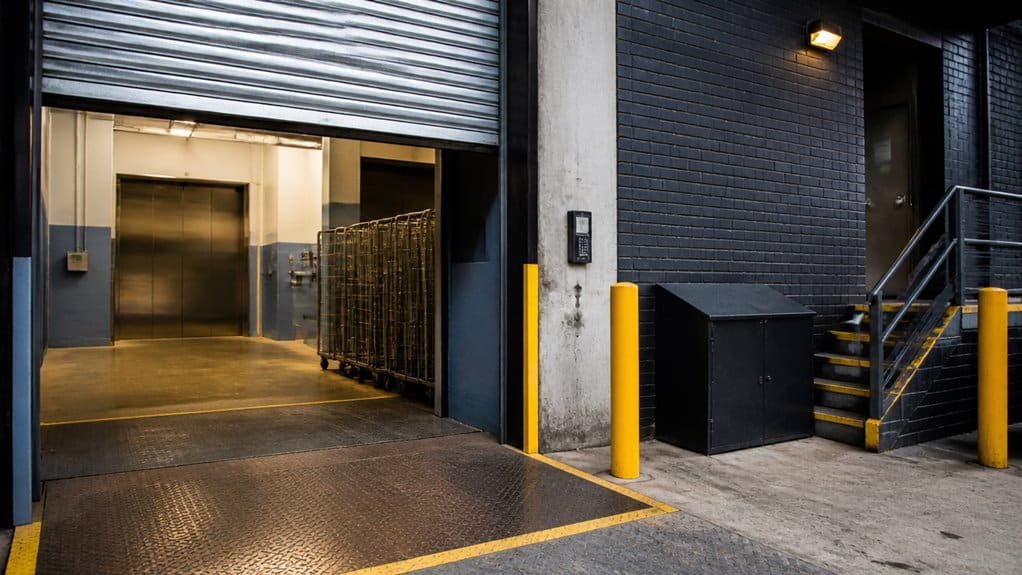
Before move-in day, the building manager should verify that the loading dock and service entrance can be used during the planned delivery window. Clear access helps movers unload safely and keeps residents, staff, and vehicles moving smoothly.
The packet should identify the correct entrance, elevator route, and any building rules that apply to large deliveries. Good service coordination also guarantees that security and maintenance teams know who is arriving.
- Confirm dock procedures, including check-in steps and required identification.
- Verify vehicle height limits, turning space, and the location of the service entrance.
- Reserve the freight elevator and confirm that protective pads or floor coverings are available.
The manager should provide written instructions to the moving company and a contact number for the day of delivery. This preparation reduces confusion and supports an organized arrival.
Understand Fees, Delays, and Storage Risks
Careful planning helps prevent unexpected costs and schedule problems during a move. Building rules may include elevator reservation fees, refundable deposits, insurance requirements, and charges for extended loading time.
The mover should provide a written estimate that separates transportation, packing, fuel, long-carry, and possible waiting fees. Delays can occur because of traffic, weather, vehicle issues, or missed delivery windows, so the packet should note who is responsible for added charges.
If the shipment arrives before the residence is ready, storage options should be reviewed carefully. Short-term storage may add handling, warehouse, and redelivery fees.
Items can also face risks from moisture, temperature changes, loss, or damage if stored improperly. Reviewing coverage limits, inventory records, and release procedures helps control moving costs and protects belongings.
Email Your Building Manager Before Delivery
Send the building manager a clear email several days before delivery to confirm the moving date, arrival window, elevator reservation, loading area, and any required paperwork.
This message helps prevent missed reservations, truck access problems, and last-minute delays. It also gives the manager time to explain building rules or request corrections.
Include these details:
- The mover’s company name, driver contact number, and estimated truck size
- The delivery address, apartment number, and planned arrival and departure times
- Copies of insurance certificates, delivery forms, or elevator reservation confirmations
Good delivery etiquette means using a polite subject line, addressing the manager respectfully, and replying promptly to questions.
Useful communication tips include asking for written confirmation and saving the email thread.
The resident should forward approved instructions to the moving company before the truck leaves California.
Frequently Asked Questions
Can My Building Require a Background Check for Movers?
A building may require background checks for movers, like a gate that screens entry, if its policies are reasonable and applied consistently.
Moving regulations often allow buildings to set security procedures, including insurance, identification, and scheduled access.
However, tenant rights may limit overly invasive demands or discriminatory rules.
The tenant should review the lease, house rules, and local laws, then ask management why the check is needed and how information is protected.
Are Weekend Deliveries Allowed in NYC Residential Buildings?
Weekend deliveries may be allowed in NYC residential buildings, but each property sets its own weekend restrictions and moving policies.
Many buildings limit large deliveries to weekday business hours because elevators, loading docks, and staff may be unavailable on weekends.
Residents should contact the building manager before scheduling, ask about required insurance or reservations, and confirm any fees.
City rules generally do not ban weekend deliveries, but building-specific rules can be stricter.
Do I Need Elevator Padding for Oversized Furniture?
Elevator padding is often required for oversized furniture, especially in residential buildings with shared elevators.
Management may require furniture protection to prevent scratches, dents, and wall damage during transport.
The mover should confirm elevator dimensions, door clearance, and weight limits before delivery.
If padding is not provided by the building, professional movers can usually supply it.
Reservations, certificates of insurance, and protective floor coverings may also be required.
Can Packages Be Delivered Before My Lease Begins?
Packages may be delivered before the lease start only if the building manager approves it; roughly 30% of buildings restrict early deliveries because storage space is limited.
The tenant should ask whether staff can accept, label, and secure items before move-in. Package security matters, since unattended boxes may be refused, returned, or lost.
Written confirmation, delivery dates, and tracking numbers help prevent problems.
Who Handles Parking Permits for the Moving Truck?
The moving company or resident usually handles parking permits for the moving truck, depending on local parking regulations.
The resident should contact the city transportation department or parking authority well before move day, because permits may require advance approval and fees.
Building management may also reserve a loading area or provide instructions.
Confirm responsibilities with the mover and manager, then keep permit documents available during moving logistics to avoid tickets or delays.
Wrapping It Up
A complete building manager packet helps a California-to-NYC move arrive without avoidable problems. Like a relay team passing a baton, each detail—insurance, COI, delivery window, dock access, and authorized contacts—must reach the next person clearly. One missing form can delay a truck at the curb and create storage fees. By confirming requirements early and emailing the manager before delivery, the mover and resident can protect the schedule, building rules, and household belongings.


