

Moving from California to a Philadelphia rowhouse requires early planning because narrow streets, tight stairs, and limited curb space can slow delivery. A temporary no-parking permit should be filed at least four business days ahead, with the exact address, timing, truck length, and contact details. Signs must be posted 24 hours before use. The mover should measure doors and stairs and should confirm the load-in plan with the landlord or building manager. More useful details follow below.
Why Philadelphia Rowhouse Delivery Needs Early Planning
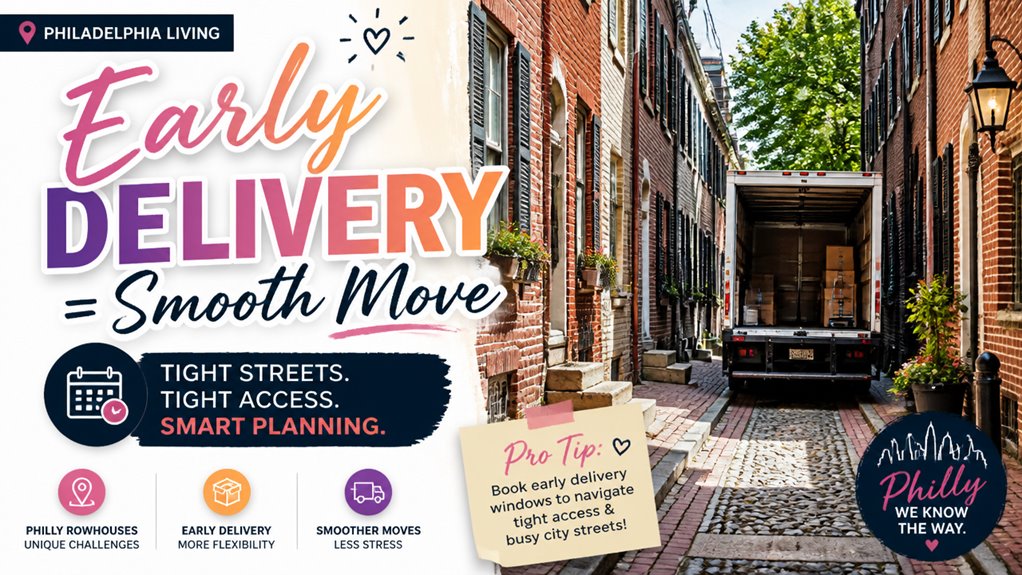
Philadelphia rowhouses can make a delivery schedule tighter than a standard suburban move, so the address should be planned early and documented carefully. For a Philadelphia Temporary No Parking permit, MoveEast should have the full name and contact information for the permit contact, the exact address where the moving truck, container, or dumpster will be placed, the length of the truck or the number of containers or dumpsters, and the permit start and end time. If the stop is for a restaurant delivery, the business privilege license number is also required.
Because Philadelphia requires the application to be submitted at least four business days in advance, dispatch should start the permit process before the truck is loaded. The Right-of-Way Unit processes the application and contacts the applicant for payment, so a complete submission matters if the crew needs a specific curb space on a tight move-in window.
If the crew has not been contacted three days before the move, the Streets Department Right-of-Way Unit should be contacted directly to check status.
Rowhouse streets often leave little room for overlap between a parked truck and regular traffic, so the delivery crew should match the permit details to the actual vehicle and placement plan. One permit covers one address only, and only one permit is allowed per address, so a separate rowhouse or delivery stop would need its own application.
If the shipment uses a truck in Center City or University City, the posted cost is $50 per 40 feet per day; in other areas, it is $25 per 40 feet per day. A moving container or pod costs $50 for up to five days, and a temporary dumpster costs $40 for up to seven days without additional permits.
Temporary no parking signs should be posted at least 24 hours before they are needed. If the application is incomplete, processing can be delayed, so the mover should verify the address, vehicle length, and permit times before submission.
Truck Parking Temporary No Parking Permits and Street Access
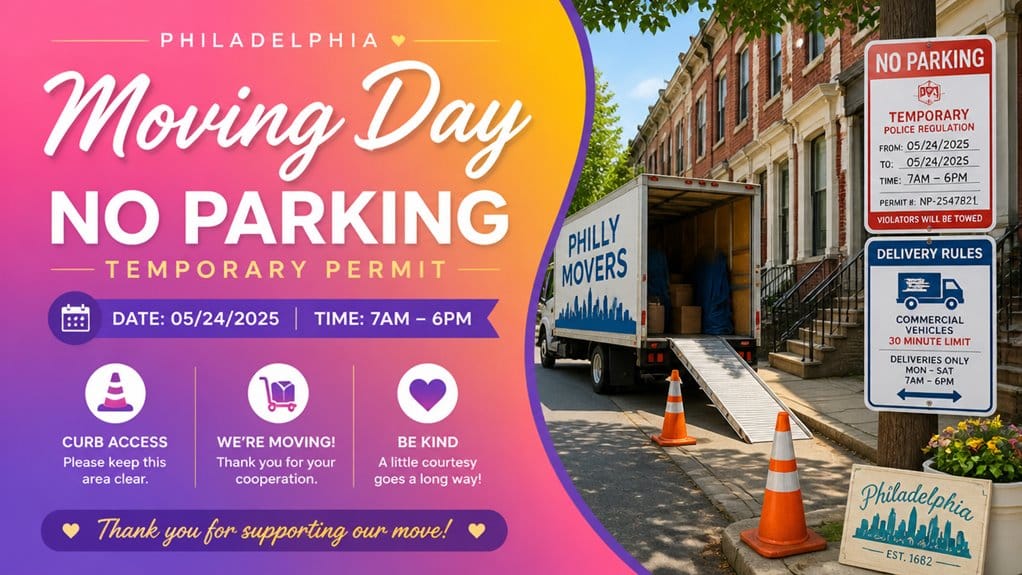
If your move requires a truck, container, pod, or dumpster in Philadelphia, plan the curb space first. MoveEast should document the exact address where the equipment will sit, along with the truck length or the number of containers or dumpsters needed. The permit application also needs the start and end time for the parking restriction, so dispatch should coordinate those details before submission.
Philadelphia uses a Temporary No Parking permit for this type of street access. The application is completed online, and only one address can be listed on each permit. If the move touches more than one address, each location needs its own permit request. The Right-of-Way Unit reviewer processes the application and contacts the applicant for payment.
Philadelphia uses a Temporary No Parking permit for street access, and each address needs its own online application.
Permit costs vary by area: in Center City and University City the rate is $50 per 40 feet, per day; in other areas it is $25 per 40 feet, per day. For a container or pod, the fee is $50 for up to five days. A temporary dumpster is $40 for up to seven days. Permit fees are non-refundable.
Applications should be submitted at least four business days in advance. If the applicant has not been contacted three days before the move, they should contact the Streets Department Right-of-Way Unit. Because processing can slow when information is missing, MoveEast should make sure the request is complete before submission.
The application must include the applicant’s name and contact information. If the move is for a restaurant, the business privilege license number is also required. Once the permit is approved, temporary no parking signs should be posted at least 24 hours before the space is needed.
Checklist for the crew and dispatch:
- Exact Philadelphia address for the truck, container, or dumpster
- Name and contact information
- Truck length, or number of containers/dumpsters
- Start and end time for the permit
- Business privilege license number if the move is for a restaurant
- Application submitted at least four business days before the move
- Temporary no parking signs posted at least 24 hours in advance
Rowhouse Stairs Tight Turns Doors and Furniture Measurements
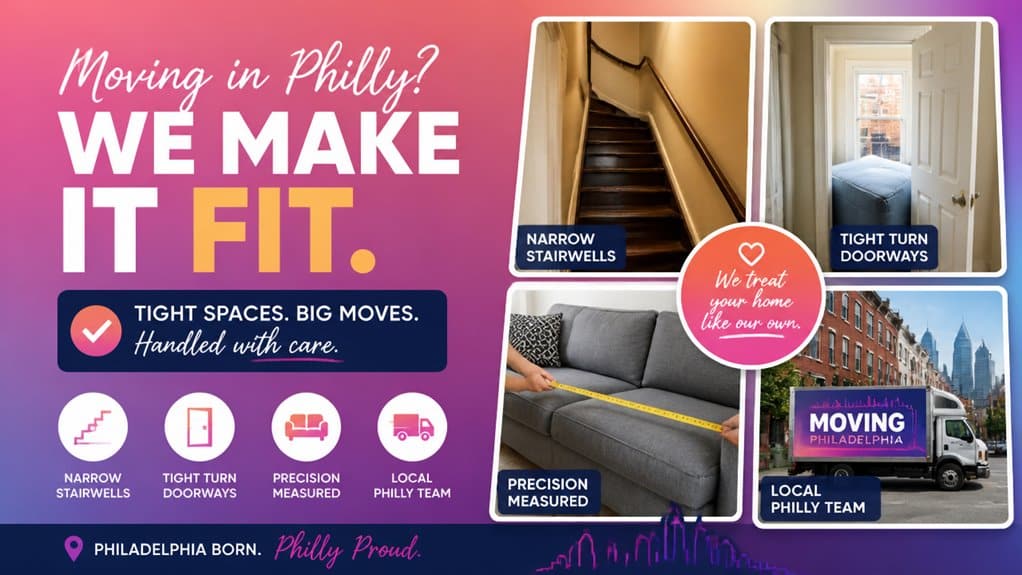
Philadelphia rowhouses often create the first real measurement problem in a California-to-Philly move: narrow stair runs, tight landings, and doors that are smaller than the furniture planned for them. Before MoveEast schedules the load, the moving crew and driver should document the full path from curb to room, not just the address. That means measuring the entry door, hallway turns, stair width, ceiling clearance, and any landing where a couch, mattress, dresser, or desk may need to pivot.
For furniture, the useful numbers are the longest dimension, the widest point, and the depth of anything that must turn through a stairwell. A sofa that fits in a truck may still fail at a second-floor turn if the frame is too long or the arm height catches the rail. Mattress sets, sectionals, bookcases, and refrigerators should be measured the same way. If a piece is large, note whether it can be carried upright, tilted, or have legs or doors removed before delivery.
In older Philadelphia homes, staircases may be too tight for straight-in delivery even when the furniture seems close to the opening size. The delivery crew should confirm whether a piece can clear the turn at the narrowest point and whether a door can stay open long enough for the move.
If the route includes a porch, stoop, or basement entrance, those access points should be measured too, since a second entrance may be the only practical way to bring in bulky items.
If the move requires a truck, container, or temporary dumpster on the street, the permit application should include the address, the exact start and end time, and the length of the truck or number of containers. Permit costs and rules may vary by area. The application should be submitted at least four business days in advance, and temporary no-parking signs should be posted at least 24 hours before the space is needed.
Because only one address is allowed per permit, the delivery crew should plan around the exact rowhouse location where the truck, container, or dumpster will sit. The Right-of-Way Unit reviewer processes the application and contacts the applicant for payment, so the move date should not depend on last-minute changes. Additionally, understanding the truck size options can help ensure the right vehicle is used for the move.
If the permit is for a restaurant property, the business privilege license number should be provided.
What to Confirm With a Landlord or Building Manager
Before MoveEast sends a moving truck, confirm the exact load-in address with your landlord or building manager. For a Philadelphia Temporary No Parking permit, the application needs the truck, container, or dumpster address and the length of the truck or the number of containers or dumpsters.
If the building uses a loading zone, ask whether the crew should use the street address, rear entrance, or another designated access point.
Confirm the allowed date and the specific start and end time for the move. The permit needs both, and the moving crew should have the same window documented so dispatch can plan arrival and parking.
Confirm the move date and exact start and end times so the permit and crew stay aligned.
If the building requires a narrower loading window than the permit request, have the landlord or manager state that before the application is submitted.
Ask whether the property limits one-per-address permit use. Philadelphia permits allow only one permit per address, and multiple applications can slow processing. If multiple units are moving the same day, confirm which unit’s move will be tied to the permit so the request is not duplicated.
If the move is for a restaurant, confirm the business privilege license number before the permit is started; the application may require it.
Because the application should be filed at least four business days in advance, confirm these details early enough for MoveEast to submit a complete request. Additionally, understanding moving industry trends can help you better navigate the permit application process.
If the building manager has not issued access or loading instructions and the Right-of-Way Unit has not contacted you three days before the permit date, check the application right away.
Ask the landlord or building manager to review the site for any sign-posting rules. Temporary no parking signs must be posted at least 24 hours before they are needed, so confirm where those signs can be placed and who will allow access if the crew needs to post them near the building.
Delivery Day Plan for a California to Philadelphia Shipment
On delivery day, keep the Philadelphia stop tightly scheduled so the crew can place the shipment without permit delays. If the truck, container, or dumpster will occupy curb space, the permit application should list the exact delivery address, the start and end time, the length of the moving truck or the number of containers or dumpsters, and the required contact name and phone number. For restaurant addresses, the business privilege license number may be required.
For a California-to-Philadelphia shipment, the delivery crew should verify the permit match before arrival. Only one address can be covered per permit, and only one permit is allowed per address, so the crew should not plan on switching to a second curb location at the last minute.
If the delivery is for a moving truck in Center City or University City, the permit cost is $50 per 40 feet per day; in other areas it is $25 per 40 feet per day. A moving container or pod is $50 for up to five days, and a temporary dumpster is $40 for up to seven days without additional permits.
The permit should be submitted at least four business days in advance, and if the mover has not been contacted three days before delivery, the Streets Department Right-of-Way Unit should be followed up with. The dispatcher should confirm that the delivery details are final before filing.
Temporary no-parking signs should be posted at least 24 hours before the truck, container, or dumpster is needed so the curb space is clear when the shipment arrives.
If the delivery is running close to the permit deadline, the moving crew should monitor application status rather than assuming approval. The permit fee is non-refundable, so any late changes to the address, timing, or usage type should be checked carefully before the permit is issued. Additionally, planning for cost-effective moving options can help manage expenses during the relocation process.
Common Mistakes That Delay Philadelphia Deliveries
Delays in Philadelphia deliveries often start with incomplete permit details. For a Philadelphia Temporary No Parking permit, MoveEast should include the applicant name and contact information, the exact address where the moving truck, container, or dumpster will be placed, and the start and end time for the permit. If the delivery is for a restaurant, the business privilege license number should be provided. Missing any of these details can slow review and delay the delivery.
Location and equipment details should match the actual delivery plan. The application should specify the length of the moving truck or the number of containers or dumpsters. Philadelphia processes only one address per permit, so combining multiple stops or addresses on one request may create delays. Only one permit is allowed per address, so duplicate applications can also slow review.
Permit details should match the actual delivery plan, including truck length or container count, and only one address per permit.
Timing is another common cause of delivery problems. The permit application should be submitted at least four business days in advance. If the mover or delivery crew has not been contacted three days before the scheduled date, follow up with the Streets Department Right-of-Way Unit. Checking the application status before the deadline helps catch missing information early enough to correct it.
Temporary no parking signs should be posted at least 24 hours before the space is needed. If signs are not in place on time, the driver may arrive without a clear legal loading area, which can delay unloading.
Fees depend on what is being placed and where; MoveEast should confirm the permit type early so the delivery crew is not waiting on a last-minute correction.
If the permit is issued late, the fee is typically non-refundable, and a refund petition may require evidence.
Practical takeaway: Confirm permit details, location, timing, and sign posting well before the delivery date.
Final Checklist Before the Truck Leaves California
Before the truck leaves California, make sure the Philadelphia permit details are complete and match the actual setup at the destination. The application needs the name and contact information, the address where the truck, container, or dumpster will be placed, the length of the moving truck or the number of containers or dumpsters, and the start and end time for the permit. If the move is for a restaurant, include the business privilege license number.
Submit the Philadelphia permit request at least four business days in advance. If the mover or dispatch has not been contacted three days before the move date, follow up directly with the Streets Department Right-of-Way Unit. The crew should monitor permit status before the deadline.
Confirm equipment details before dispatch loads out. Philadelphia permit costs depend on the location and usage type: a moving truck in Center City or University City is $50 per 40 feet, per day, while a moving truck in other areas is $25 per 40 feet, per day. A moving container or pod is $50 for up to five days, and a temporary dumpster is $40 for up to seven days without additional permits.
Enter the truck length or container count exactly as planned for the Philadelphia stop. If temporary no-parking protection is required at the destination, post the signs at least 24 hours before they are needed. Because only one address can be listed per permit and only one permit is allowed per address, confirm the final drop-off location before the truck departs California to avoid duplicate applications and extra processing time.
Permit fees are non-refundable, even if plans change. If the permit arrives late, a refund petition form is available, but substantial evidence may be required. Keep the permit record, payment status, and delivery window together so the shipment can be documented when it reaches Philadelphia. Additionally, ensure that your item list is accurate and detailed to avoid any discrepancies with the moving company’s pricing.


