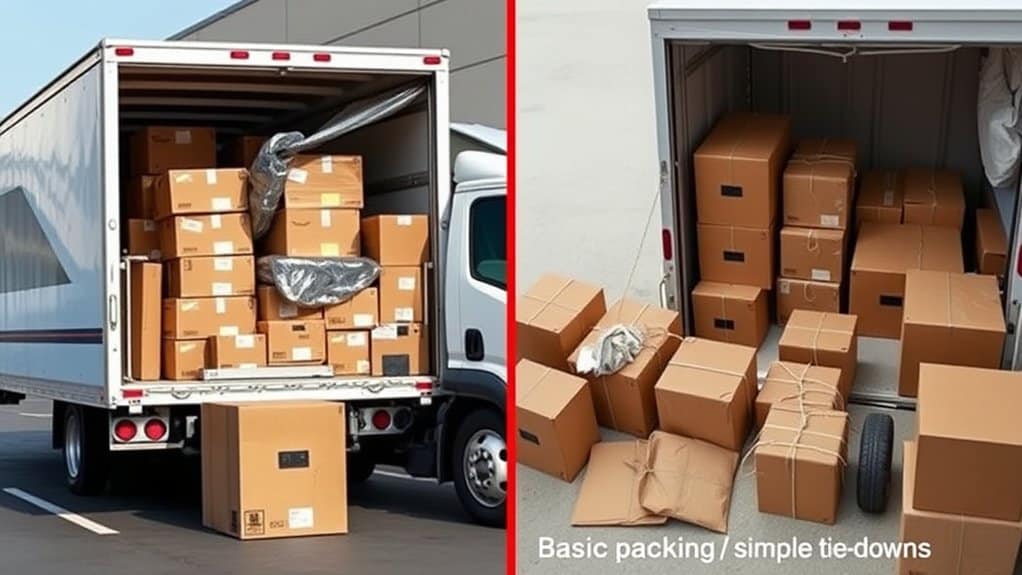
When choosing between full-service and DIY moves, consider your budget, timeline, and physical capabilities. Full-service movers cost more ($400-$1,200 locally) but handle everything from packing to placement, while DIY moves ($30-$200 for truck rental) offer cost savings but require significant time and effort. Local moves often suit DIY approaches, but long-distance relocations benefit from professional services. Factors like valuable items, storage needs, and hidden costs will shape your ideal moving strategy.
Cost Analysis: Breaking Down Full-Service vs. DIY Expenses
While the upfront costs of a DIY move might seem more budget-friendly, understanding the complete financial picture requires a deeper analysis of both direct and hidden expenses.
A detailed cost breakdown reveals that DIY moves typically start with truck rental fees of $30-$200 for local moves, plus packing supplies ranging from $100-$500. You'll also need to factor in fuel costs, labor help at $25 per hour, and potential equipment rentals.
When comparing this expense comparison to full-service movers, you'll find their base rates of $400-$1,200 for local moves include equipment, professional handling, and basic insurance. Moving specialty items like pianos cost extra, typically ranging from $100 to $500.
Though full-service moving costs 2-7% more overall, you're protected from hidden expenses like late fees, physical strain, and potential damages that often plague DIY moves.
Essential Factors to Consider Before Making Your Choice
Before choosing between full-service and DIY moving options, you'll need to carefully evaluate several key factors that directly impact your relocation success. Your moving preferences and distance play vital roles in this decision.
For local moves, DIY approaches often work well since you'll manage shorter distances and simpler logistics. However, long-distance relocations typically benefit from professional services due to complex coordination requirements. Additionally, cross country movers specialize in navigating the intricate logistics of interstate relocations.
Consider your specific relocation challenges, especially for international moves where you'll need experts to handle customs paperwork and cross-border transport.
If you're dealing with timeline uncertainties, full-service movers offer secure storage solutions that DIY methods can't match. The complexity of your move increases markedly with distance, so it's important to align your choice with both your capabilities and the move's geographical scope. Assessing your relocation budget is crucial, as full-service movers typically cost more but provide comprehensive support throughout the entire process.
Understanding the Full-Service Moving Experience
When you're looking into full-service moving, you'll find all-encompassing packages that cover everything from initial packing to final furniture placement in your new home.
Professional movers handle the logistics and timing of your move, coordinating each phase while keeping you informed of the schedule and any potential adjustments needed along the way.
Your belongings will be protected through various insurance options and liability coverage, giving you peace of mind that your items are in capable, accountable hands throughout the entire moving process. Additionally, full service movers offer packing services available, ensuring that all your belongings are securely packed for transport.
Professional Service Package Components
Since professional movers offer extensive packages tailored to your needs, understanding their full-service components can help you make an informed decision.
Their packing strategies include supplying all materials and specialized handling of delicate items, while service flexibility allows you to choose between thorough or partial assistance.
You'll benefit from expert furniture handling, with teams that can disassemble and reassemble large pieces while protecting them during transit.
The service extends beyond basic transportation, offering logistics management for long-distance moves, vehicle shipping, and guaranteed delivery windows.
Additional perks include climate-controlled storage options, debris removal, and tech installation assistance.
For your peace of mind, they'll use professional equipment and proven techniques to prevent damage, while providing real-time tracking throughout your move. Hiring professionals also ensures liability coverage for items packed by experts, which adds an extra layer of security during your relocation.
Logistics and Timeline Management
While DIY moves can seem more flexible, full-service relocations require careful timeline planning to guarantee a smooth shift.
You'll need to start your moving logistics 4-6 weeks ahead, with even more lead time during peak summer months from June through August. Planning ahead becomes especially important if you're moving a larger home, as a typical 3-bedroom relocation can involve up to 51 hours of total coordination.
When you opt for professional services, you'll benefit from streamlined processes that eliminate the complexities of planning timelines. Additionally, a thorough understanding of local regulations and requirements can help you avoid potential pitfalls during your move.
Your moving company will handle the intricate details of loading, transportation, and unloading, freeing you from physical labor and coordination stress.
During off-peak seasons in fall and winter, you might need only 2-8 weeks of preparation, making the process even more manageable.
Insurance and Liability Protection
Understanding your moving insurance options marks a critical step in choosing between full-service and DIY relocations.
When selecting a full-service move, you'll encounter two primary liability coverage choices: Full Value Protection and Released Value Protection. Federal law requires movers to offer these insurance options and explain them clearly.
Here's what you need to know about professional moving coverage:
- Full Value Protection covers 100% of repair or replacement costs
- Released Value Protection limits compensation to $0.60 per pound
- Claims must be filed within 9 months of delivery
- You can combine mover coverage with your homeowner's insurance
You'll want to carefully evaluate your belongings' worth and risk tolerance when choosing coverage. Additionally, understanding the differences between valuation coverage and insurance can significantly influence your decision-making process.
Full Value Protection costs more but provides extensive coverage, while Released Value offers basic protection at no additional charge.
The Reality of Planning a DIY Move
While you might expect significant savings from a DIY move, you'll need to account for numerous hidden expenses like truck rentals, packing supplies, fuel costs, and potential equipment rentals that can quickly add up.
Managing time effectively becomes essential as you'll be coordinating multiple tasks simultaneously, from packing and cleaning to scheduling truck rentals and recruiting helpers.
Your careful planning needs to start at least 60 days before the move date, as underestimating the time required for each task can lead to rushed decisions and costly mistakes.
Hidden Costs Add Up
Many aspiring DIY movers discover that the initial appeal of saving money quickly fades when confronted with a multitude of unexpected expenses.
These hidden expenses often catch people off guard, turning what seemed like a budget-friendly option into a series of financial surprises.
Consider these often-overlooked costs that can greatly impact your moving budget:
- Fuel surcharges and toll fees that accumulate quickly during long-distance moves
- Unexpected packing supplies when you run out mid-move
- Equipment rental add-ons and mileage charges that weren't in the initial quote
- Physical damage costs from improper handling of items
When you factor in these expenses, along with potential costs for replacement materials and emergency supplies, your DIY move might end up costing more than anticipated.
It's essential to account for these hidden costs when comparing moving options.
Time Management Challenges
Beyond the financial implications of a DIY move lies an equally significant challenge: managing your time effectively throughout the process. Time allocation becomes critical as you balance multiple tasks, from packing delicate items to coordinating with helpers and planning your route.
Task prioritization often suffers when you're juggling physical demands with logistical complexities. You'll need to account for potential delays from weather, traffic, and the learning curve of operating a moving truck.
Limited workspace and helper availability can create bottlenecks, while sleep deprivation from long hours affects your decision-making. Breaking down larger tasks into manageable chunks and building buffer time into your schedule helps prevent burnout.
Smart Money-Saving Strategies for Both Options
Whether you choose a full-service moving company or opt for a DIY approach, smart planning can greatly reduce your moving expenses.
By implementing proven budget hacks and packing tips, you'll save money while ensuring a smooth changeover to your new home.
Consider these cost-cutting strategies that work for both moving methods:
- Schedule your move during mid-week or off-season periods for discounts up to 30%
- Gather free moving supplies from local stores and online marketplaces
- Declutter thoroughly before packing to reduce transportation costs
- Coordinate utility disconnections to avoid overlapping charges
For full-service moves, don't forget to compare multiple quotes and ask about special discounts.
If you're going DIY, recruit friends to help with loading and unloading instead of hiring professionals.
Either way, careful planning leads to significant savings.
Which Moving Method Suits Your Situation
Now that you've learned how to save money on your move, selecting the right moving method for your specific situation will maximize those savings.
Consider your moving preferences alongside key factors that influence relocation stress. If you're moving long-distance or have a large household, full-service movers typically offer the best value, handling complex logistics and providing specialized equipment.
For those with health limitations or valuable items, professional movers' expertise in proper lifting techniques and fragile item handling becomes essential.
However, if you're moving locally with minimal belongings and good physical health, a DIY approach might work well.
Time constraints also matter - when you need to focus on other priorities like work or family, full-service movers can manage the entire process while you handle life's other demands.
Tips for Maximizing Value in Your Moving Choice
Making the most of your chosen moving method requires careful attention to both obvious and hidden costs while considering the value of your time and peace of mind.
When conducting your value assessment, compare full-service and DIY options through an extensive service comparison that looks beyond just the price tag.
To maximize value in your moving choice:
- Calculate all potential DIY costs, including per-mile charges, fuel, and possible late fees.
- Factor in the monetary value of your time that you'll spend planning and executing the move.
- Consider the cost implications of potential injuries or damaged items from inexperienced handling.
- Evaluate included services like insurance coverage, specialty item handling, and real-time tracking.
Conclusion
Like a chess player weighing their next move, you'll need to carefully evaluate your specific circumstances before choosing between full-service and DIY moving. Consider your budget, time constraints, physical capabilities, and stress tolerance. While full-service moves offer convenience at a premium, DIY approaches can save you money if you're willing to put in the work. Whichever path you choose, proper planning and realistic expectations will help guarantee a successful relocation.